
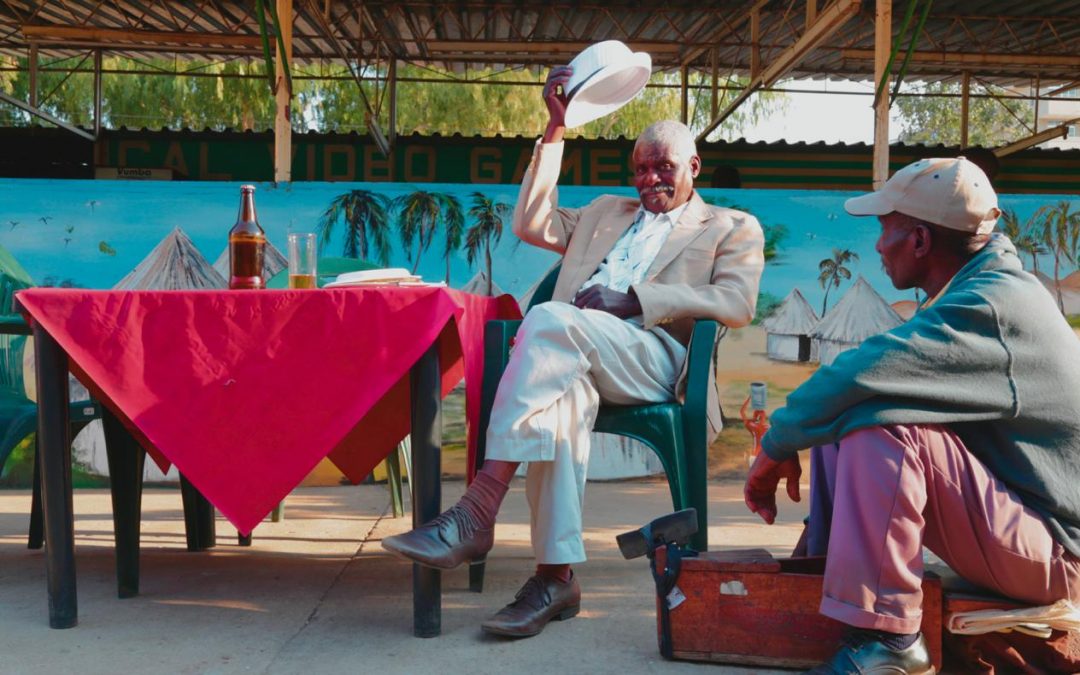
The African film and football industries have growing international reach, so why are two talented filmmakers struggling to raise finance?
When Argentine cinematographer Fabián Ribezzo landed in Mozambique in 2005 he arrived with a suitcase full of camera gear and his own prejudices. What he learned in the decade he spent living and working in this sub-tropical country on the Indian Ocean was that things are never quite how they are portrayed by the media or in the movies. Big global media, and blockbuster movies, that is.
“Mozambique was totally different to what I expected," he says. He had anticipated the familiar media images of war and poverty but what he found was "another place altogether". As everywhere, life could be complex, tragic, even violent, but it was also alive with music, dance and laughter. Ribezzo brings that range of experience to his multi award-winning film A Tropical Sunday, which reflects one of his biggest lessons from Mozambique: "Humour is the bridge to connection."
Now living in Reggio Emilia, Italy, he’s perfecting the script for a full-length feature film. It is based on one of his many experiences while making and screening educational videos, documentaries and fictional films for international development agencies on everything from urban planning to public health.
The film tells the tale of what happens when the tables turn for its central character, Elena, a European aid worker. Stripped bare, literally and figuratively, she finds herself roaming a coastal village and forced to ask for help from the people she was sent to help. What transpires is not ‘maningue nice’. The phrase, which Ribezzo has chosen as the working title for his comedy, is an expression commonly used by people across Mozambique and translates as ‘very nice’, or ‘awesome’.
The process of securing funding for production of the film is not very nice either but Ribezzo has reason to be maningue determined. "Two things make it investable," he says. "For one it's a comedy. Two the timing might be right.”
Humour is the bridge to connection
–– Fabian Ribezzo
Lights, camera, Africa!
In 2026, African film had a strong opening. Nigeria’s My Father’s Shadow, directed by Akinola Davies Jr,. won the BAFTA for Outstanding Debut. Three African co-productions competed for the Golden Bear at the Berlin International Film Festival, while Sundance selected three films from the continent from 16,000 submissions worldwide.
Africa’s film markets reflect distinct cultures, languages and identities. And this growing international recognition offers audiences a rich picture othat challenges Western stereotypes, including the “dark continent” label that Ribezzo dismisses as “ridiculous, crazy”.
Kenyan cinematographer and director Michael Chege also rejects that view. His work spans award-winning features, documentaries and television commercials, and has taken him to Europe and the US. He believes the biggest misconception about Africa is that it's impossible to film in. "People see Africa in a bad light until they come here and see for themselves. Not only have standards around equipment and expertise risen, its markets are versatile and dynamic," he says.
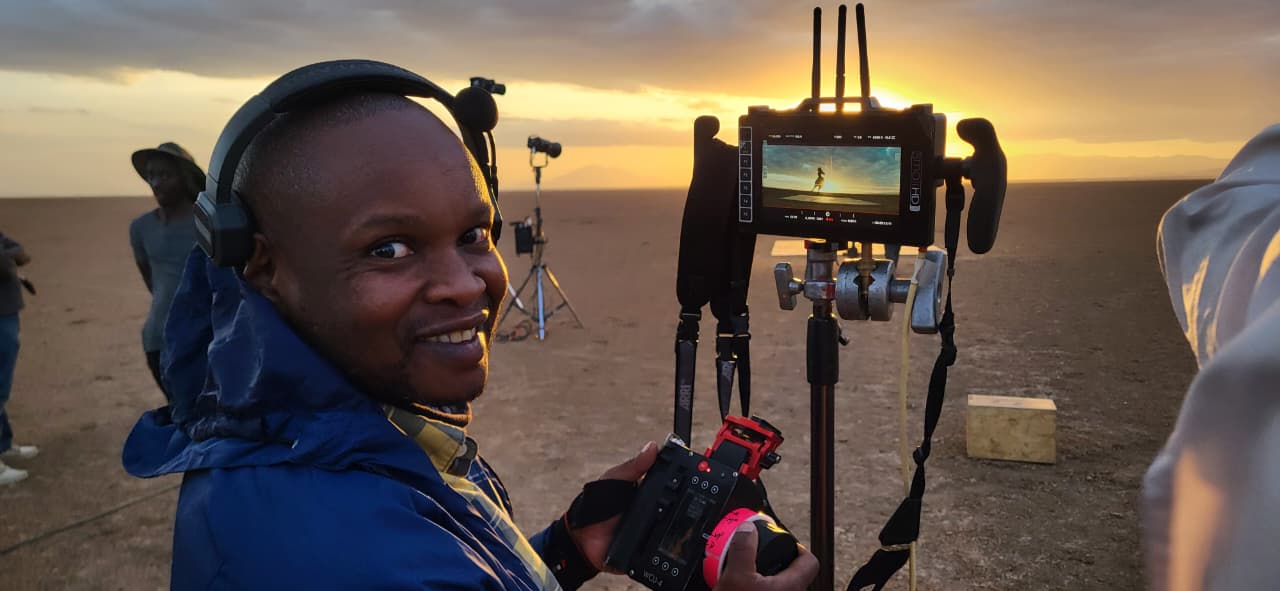 Michael Chege on location in Kenya
Not only have standards around equipment and expertise risen, Africa's markets are versatile and dynamic
–– Michael Chege
Unlike Western cinema, many industries, particularly Nigeria’s Nollywood, largely bypassed celluloid because of high costs, limited laboratory infrastructure, and import barriers. This leap directly into video and then digital production enabled filmmakers to operate independently of foreign funding and build high-volume, locally relevant industries. Today, affordable digital tools, from smartphones to 4K cameras, combined with platforms such as Netflix, Showmax and YouTube, are expanding reach and visibility, though monetisation remains uneven.
Lower barriers to entry are fostering new talent, supported by a young, mobile-first population with median age around 19. Digital distribution and marketing tools also allow independent filmmakers to reach audiences directly, partially offsetting constraints around funding and promotion.
But the rise of tech, and most recently the explosion of generative AI, has delivered challenges for many of Africa’s filmmakers. “Funding has dried up, and budgets have been cut. We’re expected to do more for less,” says Chege, who is seeking finance for a sports docudrama. The story is based on Ricky Weir's memoir Illegitimately Blessed, a story of growing up illegitimate and mixed race in Scotland, and a return to ancestral roots via football. Chege met Weir while filming the first promotional video for the Kenya Walking Football Federation, which promotes low-impact, non-contact football for adults. “Ricky was on one of his many trips to Kenya donating football jerseys, balls and expertise from the UK, and he was refereeing. “I was intrigued about his perception of the world and his passion for Africa,” he adds.
Comedy and sport are arguably no-brainers for the Africa’s film and audiovisual sector, which has, according to UNESCO’s landmark report, enormous potential. The sector could generate $20 billion in annual revenue and support over 20 million jobs. Meanwhile, African viewing audiences are projected to grow from 250 million in 2025 to over a billion by 2035.
Yet today the sector only contributes around $5 billion to the continent's gross domestic product, much of that coming from Nigeria's Nollywood where around 2,500 films are produced annually. Nigeria and South Africa are the main markets for the two biggest streaming platforms, Netflix and DSTV, and film makers there are most likely to secure funding. “Elsewhere, they mostly let you shoot your production out of pocket and then pick-up once you finish off,” Chege says. That leaves many African filmmakers crowdfunding or “begging corporates”, which sometimes works, but can come with creative compromises and a "script owned by whoever invests the money”.
That’s less of a worry for Ribezzo. “I don’t love dialogue so much. Mute films are perfect,” says the huge fan of Charlie Chaplin. The influence did not go unnoticed at the 2014 International Film Festival in Rotterdam where A Tropical Sunday received this review: ‘As if Charlie Chaplin was still alive and lived in Mozambique.’
A BOOMING INDUSTRY
US$20bn – Potential annual value of Africa's film and audiovisual industry
20 million+ – Potential jobs supported across the sector
250 million → 1 billion+ – Projected growth in African viewing audiences between 2025 and 2035
US$5bn – Current contribution of the sector to Africa's gross domestic product
2,500 – Approximate number of films produced annually by Nigeria's Nollywood
19 – Median age across much of Africa, creating one of the world's youngest creative talent pools
Location, location, location––and local content
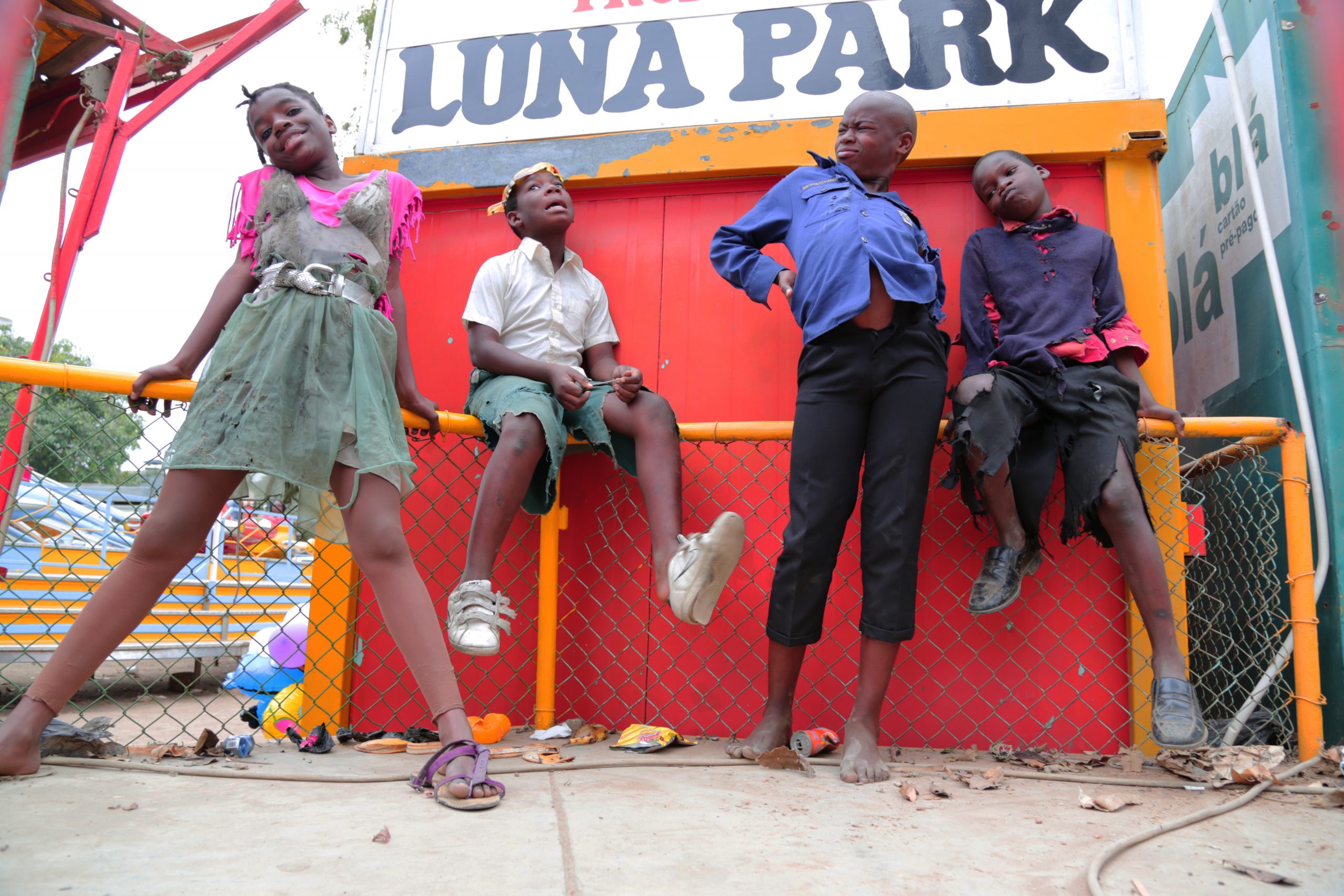
Africa's "amazing kids" could benefit from investment in the film industry
For Ribezzo, production is the main concern. ‘If I can do it for €200,000, we won’t lose money,” he says, and thinks he can. He’s working for free. So is his co-director, Mozambican Diaz Santana, his “dearest friend, and also a very good actor”. Another friend, an Austrian musician and sound engineer, will handle the soundtrack in Mozambique, where he has lived for 25 years.
Ribezzo couldn’t make the film without Santana, his first assistant on A Tropical Sunday. “Diaz helped to set up and run 200 auditions for the incredible, amazing kids we cast,” Ribezzo says. The funny, poignant short follows scavenging street children around a funfair in the capital Maputo, where sheer grit and talent win them the ultimate ride. “He’s the perfect person to direct actors and talk with local people,” Ribezzo says.
Casting Elena will be harder. Ribezzo sees her white British, German or Scandinavian, willing to roam a rural African village in their underwear, be talented, and ideally famous. Germany’s Sandra Hüller would be first prize, but Laure Calamy, Kate Winslet or Olivia Colman are also on his list.
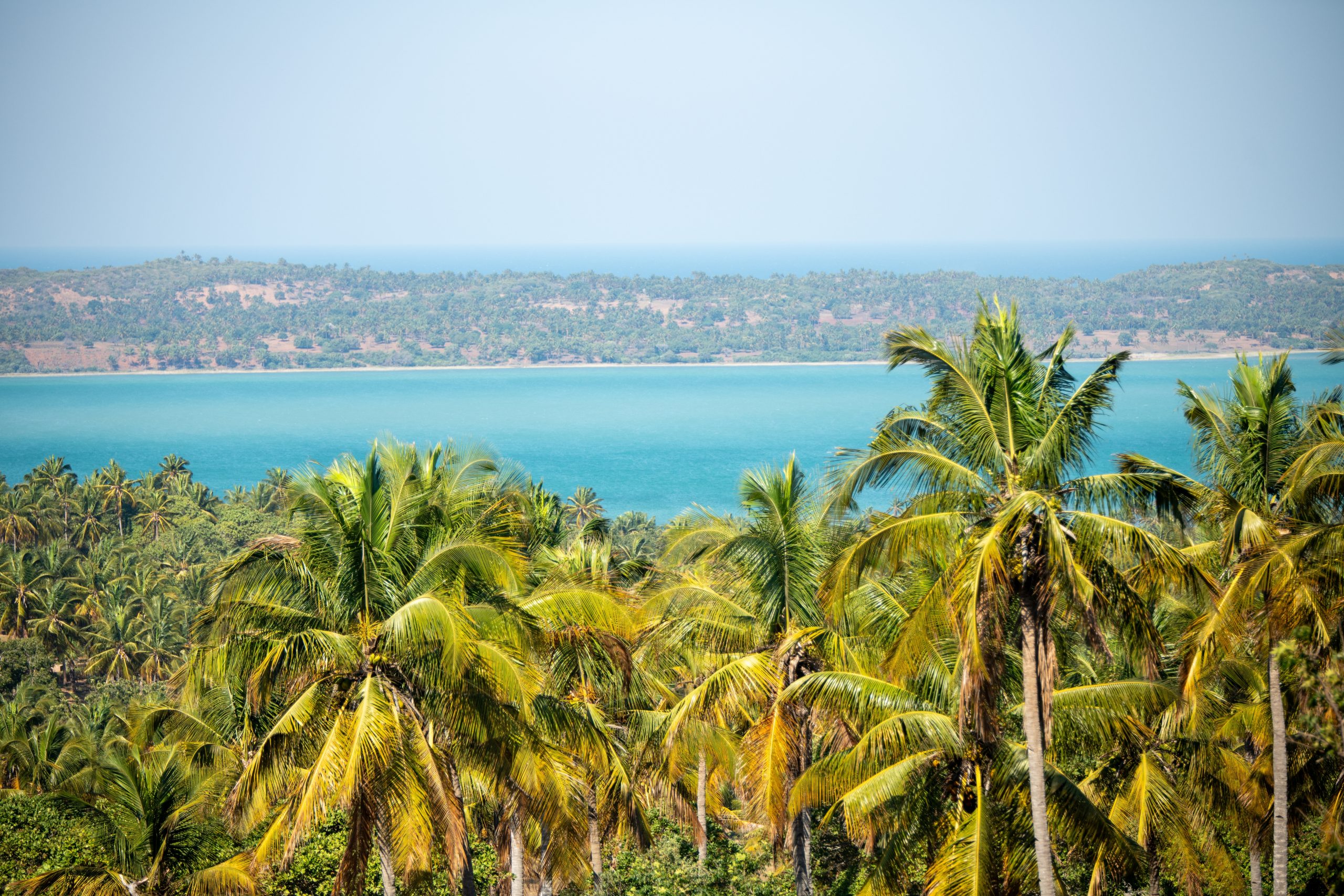
But won’t that be too risky? The question annoys Ribezzo. He can only speak for Mozambique, but he plans to film in southern Inhambane Province, known as “the land of the good people”.
His film doesn’t need a hundred locations. Set in a village, it explores petty thefts, small lies, unrequited love, corruption and desire. It reveals what happens when a European aid worker’s good intentions meet the realities of village life. Using mostly local talent, Ribezzo hopes to tell a funny, universal story.
Chege, meanwhile, needs €96,000 to shoot in Scotland, Jersey, Nigeria and Kenya. Nairobi offers quality accommodation and local production teams who can support shoots across a range of locations. Visitors often stick to places they believe are safer, he says, overlooking much of what Kenya offers: “There are beaches, city, wildlife, mountains––it’s the best of all worlds in one location.”
Why film elsewhere...it’s the best of all worlds in one location
It's time to score
Given its scale and innovation, African film is now attracting large-scale capital and aiming to build long-term infrastructure rather than one-off passion projects. There is the dedicated Afreximbank Film Fund, which has $1bn to finance production, distribution, and digital infrastructure. The International Finance Corporation is investing in digital production platforms like "Filmmakers Mart" to centralise services and is collaborating with partners like EbonyLife Media to create investment vehicles.
Meanwhile, the European Union has been providing financial backing to help African film makers move from script to screen, incentivising EU-Africa co-production, to take films to international festivals and build professional capacity, through a combination of financial grants, co-production incentives and capacity building programmes. Film and the creative industries are now integrated into the EU’s Global Gateway strategy, which links cultural investment to broader goals of job creation and social cohesion.
“It all sounds so good on paper, but it’s not so easy,” snorts Ribezzo, who is not only the director and scriptwriter, but is also fast having to learn to be a producer. Chege agrees and wants to understand how you secure these funds. His team has written a “rigorous” 500-page document on why his docudrama is investable and they are exploring multiple options for funding. You would think he might get lucky. Early research from the indicates that the beautiful game played in Africa has growing reach, emotional resonance and exportability. The 2026 FIFA World Cup has provided further evidence that the timing might be right: a record nine African nations progressed beyond the group stage, Morocco reached the quarter-finals, and debutants Cape Verde emerged as one of the tournament’s most compelling underdog stories. The harder challenge is persuading investors.
Ribezzo may not be making a film about football but he is Argentine: "I’m one of those people who follow football in a low-key sort of way, but during the World Cup, I go wild. And this morning I woke up feeling very Argentine, and I thought: I’m in the 57th minute of my life, so now I’m going to score three goals. In fact, I’ve got three screenplays."
So, if there are any investors out there, willing to take a punt on passion in a fast-growing sector, with exploding audiences on a continent that is anything but dark, then that would be maningue nice.
Watch Fabián Ribezzo's award-winning short film –– A Tropical Sunday