
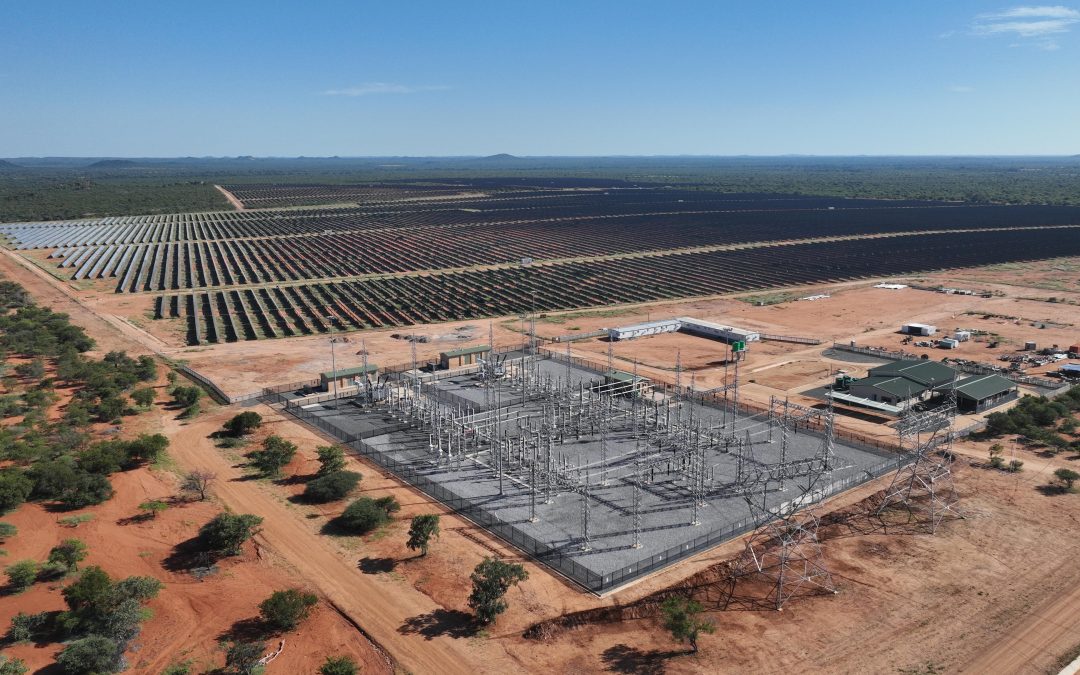
DELVE IN EXPLAINER | 01
How can fragmented African projects build investable scale – and who captures the value?
Micro, small and medium-sized businesses underpin economies across Africa, yet they remain chronically under financed. According to the International Finance Corporation, formal MSMEs in sub-Saharan Africa face an estimated $331 billion financing gap. Given that they account for around 90% of businesses and almost 80% of employment, finding creative ways to connect them with capital has become an economic imperative.
The challenge, however, is not simply one of finding more capital. It is connecting the right type of capital with businesses at different stages of growth. From start-ups seeking early equity to established infrastructure companies raising expansion finance, access to capital remains one of the defining constraints on growth. The question is not whether capital exists, but how businesses and projects become investable.
Recent developments suggest financing models are beginning to evolve. In June 2026, Zafiri launched with $176 million in committed capital to invest in distributed renewable energy companies across sub-Saharan Africa, reflecting growing investor interest in scalable operating platforms rather than individual projects. Meanwhile, Ghana's newly launched Ci-Gaba Fund demonstrates that substantial pools of African pension capital are increasingly seeking productive domestic investment opportunities.
The scale of the challenge helps explain why new financing models are emerging. The World Bank estimates that achieving universal electricity access in Africa could require around 160,000 mini-grids, compared with just over 3,000 operating and around 9,000 planned in 2023. It argues that meeting this challenge will require moving from one-off projects to portfolios of modern mini-grids capable of being deployed at scale.
160,000
Approximate number of mini-grids the World Bank estimates Africa could need to achieve universal electricity access
Across sectors, approaches are emerging. In infrastructure, renewable-energy platforms such as Lekela Power brought together wind farms in South Africa, Egypt and Senegal into a professionally managed regional business that ultimately attracted large-scale institutional investment. In agriculture, cooperatives such as Githunguri Dairy Farmers Cooperative Society combine the production of thousands of smallholder farmers, enabling investment in milk collection, processing, branding and distribution that individual producers could never finance alone. Companies such as Husk Power demonstrate another route, developing repeatable operating businesses that become financeable platforms in their own right.
These examples look very different, but they all attempt to solve the same problem: how can fragmented opportunities achieve investable scale? The answer is increasingly described as aggregation.
Whether combining projects, businesses, producers or customers, aggregation seeks to reduce fragmentation by creating structures that are easier to finance, operate and scale. Done well, it can reduce transaction costs, diversify risk, strengthen performance data and create more predictable revenue streams. But aggregation is not simply about size, nor is it a guarantee of commercial success.
Perhaps more importantly, aggregation is not a single model. Sometimes investors assemble portfolios from the top down. Sometimes entrepreneurs, operating companies and cooperatives build commercial scale from the bottom up. Both routes seek to overcome fragmentation, but they may produce very different outcomes for ownership, bargaining power and long-term value creation.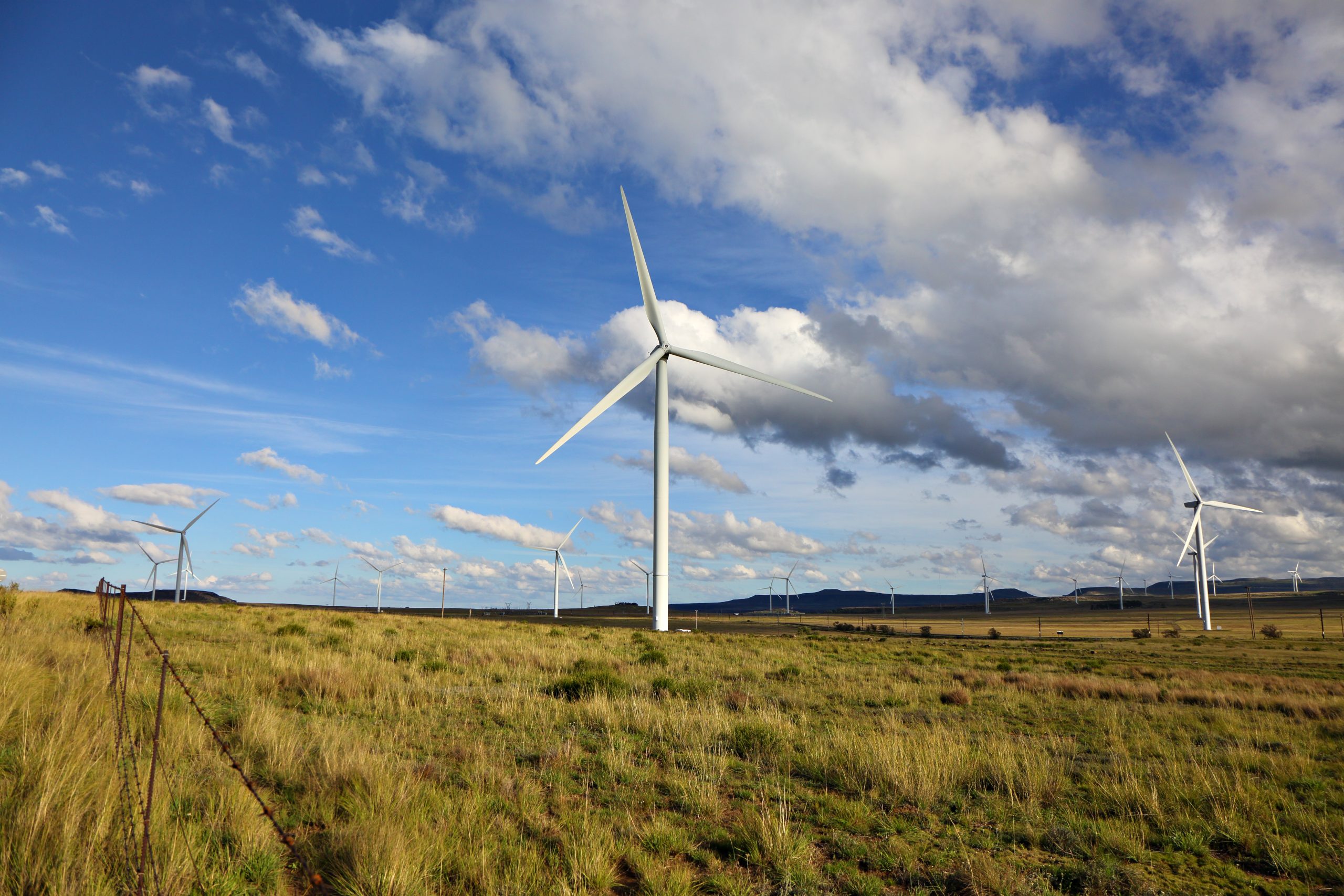 Bringing multiple wind farms together within a professionally managed regional platform helped Lekela achieve the scale sought by institutional investors
Why aggregate?
Aggregation can offer several advantages:
- economies of scale
- lower transaction costs
- standardised contracts and operating procedures
- stronger operational and financial data
- diversification across projects, customers and markets
- greater bargaining power
- larger and potentially more predictable revenue streams
- greater visibility for investors.
Yet aggregation is not a cure-all. Projects still require viable customers, credible revenues, capable management and manageable risks. Scale makes good businesses easier to finance; it does not automatically transform poor ones into attractive investments.
Two possible routes
1. Top-down: investors build portfolios
Infrastructure funds, private-equity firms and large developers increasingly assemble assets into diversified portfolios capable of attracting institutional investors.
Lekela Power provides one example. Established in 2015 by global infrastructure investor Actis and renewable-energy developer Mainstream Renewable Power, the platform brought together wind farms in South Africa, Egypt and Senegal. By the time it was acquired by Infinity Power in 2023, Lekela owned more than 1GW of operating renewable-energy capacity.
The individual wind farms remained separate assets, but together they formed a professionally managed regional platform with geographic diversification, operational scale and a performance record capable of attracting long-term investors.
2. Bottom-up: producers build commercial scale
Aggregation can also begin much closer to the ground. Rather than starting with institutional capital, producer organisations, cooperatives and entrepreneurs combine fragmented supply, customers or businesses to create commercially viable enterprises.
Githunguri Dairy Farmers Cooperative Society illustrates this approach. Thousands of smallholder dairy farmers pool their milk through the cooperative, allowing investment in chilling facilities, processing plants, distribution networks and the Fresha consumer brand. Individually, few members could finance this infrastructure. Collectively, they have created a substantial processing business while retaining producer ownership.
Similar approaches are emerging across agriculture through producer organisations, aggregation centres, digital marketplaces and business platforms that combine supply, logistics and market access.
| TOP-DOWN AGGREGATION | BOTTOM-UP AGGREGATION |
| Begins with investors seeking scale | Begins with fragmented producers or businesses |
| Combines assets into portfolios | Combines production, supply, demand or market access |
| Usually led by funds, developers or large companies | Usually led by cooperatives, entrepreneurs or business networks |
| Seeks institutional investment and predictable returns | Seeks stronger businesses, market access and bargaining power |
| Risk: ownership becomes concentrated | Risk: dependence on the intermediary or cooperative |
Where the two routes meet
In reality, the boundary between models is becoming increasingly blurred.
Operating companies may begin by developing individual projects before evolving into scalable businesses capable of attracting institutional finance.
Husk Power illustrates this hybrid model. Since its founding in 2008, the company has built, owned and operated decentralised electricity systems serving households, businesses and community facilities. Rather than financing every mini-grid as a standalone venture, Husk developed a repeatable operating model across an expanding portfolio of sites.
"The mini-grid industry is capital intensive, so however you cut it—early stage or later stage—you have to have the equity to build," says William Brent, Chief Communications Officer at Husk Power. "Husk made a decision early on to seek equity at the corporate level, as opposed to raising equity project by project. That required a replicable model that was bankable."
Husk made a decision early on to seek equity at the corporate level, as opposed to raising equity project by project. That required a replicable model that was bankable
That strategy has helped Husk attract equity investment, corporate debt from the European Investment Bank and local-currency revolving finance. Investors increasingly finance the company's growth platform rather than assess every mini-grid in isolation.
Building scale, however, does not remove the financing challenge–it changes it. As businesses mature, they move from seeking project equity and early-stage finance to raising corporate equity, debt and institutional investment to fund continued expansion. Even large, established companies continue to compete for growth capital. The challenge is therefore not simply becoming investable, but securing the right type of finance at each stage of development.
Husk's experience raises a broader issue. Can more locally owned African developers follow the same path, or does access to corporate-level capital remain out of reach until businesses have already achieved significant scale?
Who captures the value?
Unlocking finance is only part of the story. As projects, producers and businesses become aggregated into larger commercial platforms, another question comes into focus: who owns the platform once value has been created?
Local developers often identify opportunities, secure land, build community relationships and assume the earliest risks, only to sell completed assets because they cannot finance long-term ownership. Farmers may gain better access to markets through cooperatives or digital platforms, but the value created may ultimately accrue elsewhere. Conversely, genuinely producer-owned businesses may enable members to participate not only in production but also in processing, branding and long-term asset ownership.
Aggregation therefore raises questions that extend beyond finance:
- Can aggregation help African businesses build stronger, investable companies while retaining ownership and decision-making?
- How should risks, returns and bargaining power be shared between local businesses, operating companies and institutional investors?
- Which models create lasting commercial value rather than simply larger portfolios?
These are questions Delve In will be exploring in the coming weeks. Get in touch if you are a developer, cooperative, operating company, fund manager, investor and financiers. We are particularly interested in practical examples where aggregation has unlocked finance, expanded market access or strengthened local businesses. We also want to hear where it’s failed to deliver the expected outcomes.
If you have experience of building or financing aggregated business models, please get in touch – info@delveinmedia.com
Further reading on Delve In
- Investable Impact: Can Quality Carbon Credits Crack It?
- African Energy: From Ashes to Renewable Opportunity
- Why Reframing Risk & Carbon Markets Matter to Africa