
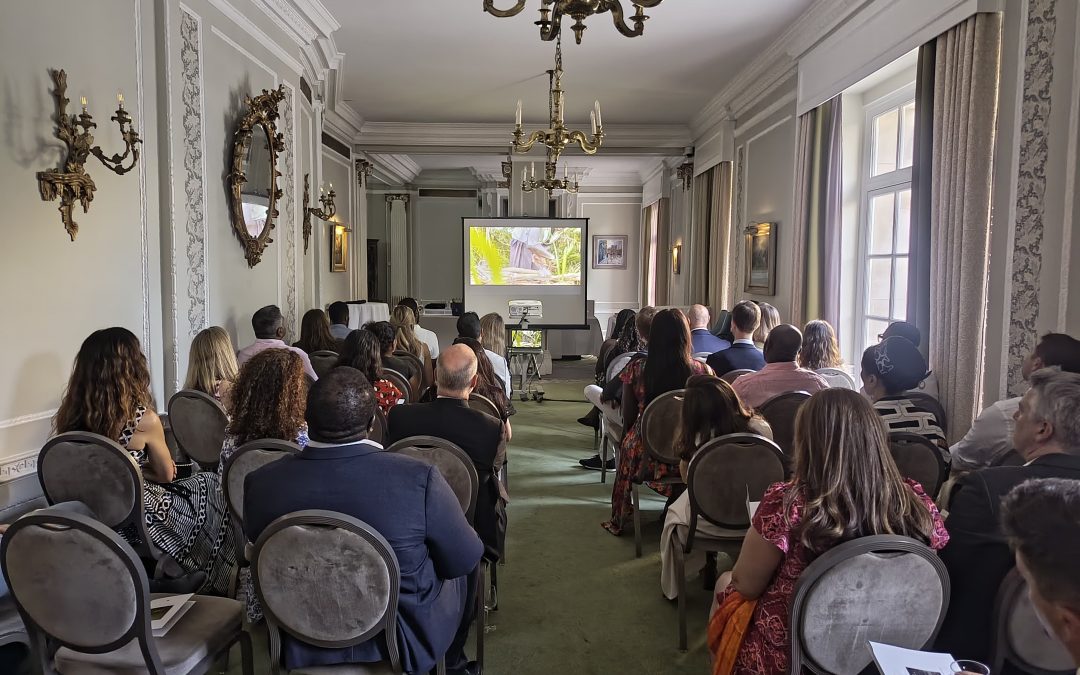
A Mandulis Energy docudrama shows the transformative impact of affordable electricity in the village of Got Ngur in northern Uganda. But could carbon finance make similar projects investable at scale? A recent panel discussion, along with industry and policy announcements suggest the needle is beginning to move.
“What it did was just magical,” said Tom Olam, a community leader, farmer and tourism operator from the outskirts of Gulu, a large and fast growing city in northern Uganda.
He might have been speaking about La Cendre Donne Naissance Au Feu, the evocative 63-minute film that screened this month at the Royal Automobile Club in London, and reveals the impact of the Mandulis Energy circular energy project through the eyes of protagonist Nancy. But he wasn’t. He was referring to biochar, one of the by-products the company sells.
Co-founded in 2012 by siblings Elizabeth and Peter BenHur Nyeko, the UK registered company operational in Uganda offers a diversified proposition––everything from renewable electricity sold under long-term rural concessions to agricultural services, biochar and internationally recognised durable carbon-removal credits. Validation has already come from the African Development Bank, Germany’s KfW Development Bank and the Dutch Fund for Climate and Development. There has been private investment, too, and some of those individuals were present for the premiere of the film that was followed by a panel discussion on carbon finance.
Olam is one of the company’s customers who purchases biochar from the Mandulis factory. Speaking on a panel after the screening of the film, he described how yields are up by 20%. “During the dry season we actually don't struggle so much because the biochar retains water,” he said.

During the dry season we actually don't struggle so much because the biochar retains water
Tom Olam, Community Leader, Tourism Operator, Farmer
Although not all biochar is created equal, Matt Lavelle, Lead Scientist at the data and science-led ratings agency BeZero Carbon, explained that high-quality material, can act as a “sort-of fertiliser that can stay in the soil for hundreds, potentially thousands, of years”. Stable, porous and carbon-rich, it is produced using biomass in a low-oxygen environment, thus dealing with the residues of Uganda’s staple and cash crops which include everything from cotton and peanuts to bananas and coffee.
Yet Olam still has a problem: his biochar-boosted crops might be returning more nitrogen to the soil but they also create more waste. Today he is still burning those residues and releasing significant greenhouse gases into the air. He is also battling the high cost of fuel, and electricity supply is patchy which is limiting for his tourism business. While solar installations have proved valuable, “they are insufficient and can be expensive to maintain and replace,” he said
Although the Ugandan government has set out ambitious plans to achieve universal electricity access by 2030, more than 55% of rural Ugandans are still without light.
Fact Flash: how is high-quality biochar produced?
Biomass gasification heats agricultural waste to high temperatures in a carefully controlled, low-oxygen environment. Rather than burning completely, the biomass is converted into a combustible gas that can be used to generate electricity, with biochar produced as a solid co-product. Its quality depends on the feedstock, operating conditions and rigorous testing of the finished material.
A village makes the case for the virtuous circle
Like Gulu, Got Ngur, a village in northern Uganda's Ndowa District, is not connected to the national grid. But for the past five years, it has had fully reliable, affordable power. Its energy is supplied by Mandulis, which uses biomass gasification, combined with solar photovoltaic in many projects to generate electricity for its mini grid.
Directed by Japanese filmmaker Aki Fujiwara and produced by France's La Félicité, the sibling co-founders wanted their docudrama to tell the story of the catalytic power of energy on the life of the village. But their own story is a powerful one too. In the civil war of the 1980s, the Nyeko family fled a Ugandan village like Got Ngur, and they remember the words of their grandmother, which gave the film its title, translated in English as ashes give birth to fire. Their experience is what has driven them to deliver reliable electricity to communities like the one their family left behind.
Before electricity came to Got Ngur, women like Nancy, the film’s protagonist, and their children, had to travel miles for healthcare. Today, it arrives on an electrically powered bike. Ugandan American Gloria Kamira, a trained medic, CEO of Exutory Africa, and one of the investors in Mandulis, was keen to highlight the human impact: “Electricity has delivered simple things like immunisation, which we in the West take for granted.” Equipped with refrigeration, the mobile healthcare unit can carry vaccinations, many of which must be stored at temperatures of between two and eight degrees Celsius.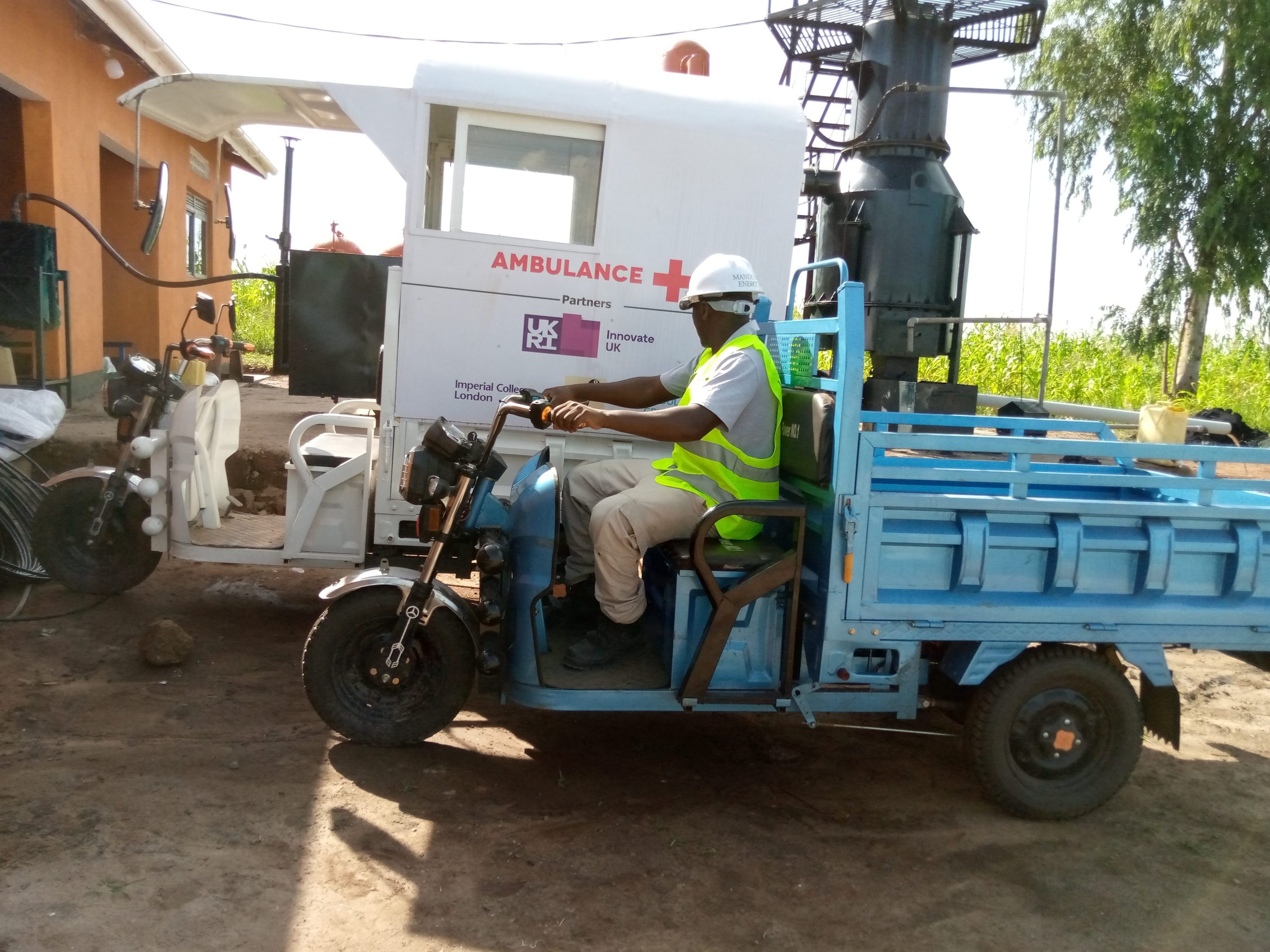 Electric vehicles deliver agricultural products and healthcare services
From nearby healthcare to classrooms with light, the film shows how electricity makes life better for women and children. It shows how power boosts business and is driving demand for everything from cleaner cooking fuel to hairdressing services and the sale of cold beer, not always with upside.
As Gonyi Akol Ajawin, General Counsel for the Africa Renewable Energy Fund (AREF), remarked, “When there is economic activity, the money goes back to the women…most gentlemen always find the nearest bar and watch the nearest football.”
The underlying point is an important one, however, and echoes what Prishani Satyapal from the ECHo Impact Fund, the Catholic Church’s equity funding vehicle in Africa, says about demand. It is women who will spend money on the family and the household: on haircuts, school shoes and the biomass cooking pellets that Mandulis is also producing from agricultural waste.
The demand is there. In closing his panel address to the London audience, Olam issued a direct plea for Mandulis to come to Gulu and deliver its 360-degree system of reliable, affordable electricity that deals with a huge environmental issue: agricultural waste. The good news is that his community of 63 farmers, four villages, several busy trading centres, a primary school with approximately 350 pupils and a growing number of shops, restaurants and small lodges, is just one of the 26 sites in Uganda that Mandulis has identified in its ambitious plans to scale. Sites have also been identified in eastern Botswana and Kwa-Zulu Natal, South Africa.
According to Elizabeth Nyeko, an engineer and former investment banker who has been recognised by MIT for her innovations in micro-grid technology, the model, is “largely proved”. The human, environmental, commercial benefits are visible and measurable. “That’s the easy part. What is more difficult is the financial engineering needed to make these projects investable,” she said in a post panel discussion.
As Ajawin acknowledged, “One of the biggest challenges Africa still faces is risk perception”. Political, currency, economic and regulatory risks are all priced into the cost of capital which significantly raises the bar, particularly for small developers. AREF targets renewable-energy projects of between 5 MW and 50 MW across sub-Saharan Africa and for reasons of risk aversion its approach has been “to put our own money in the ground first and then fund the debt after that”.
He also noted that while “Peter has been obsessed about impact from day one,” private equity is not that interested in making a difference. Although this means is that investors still tend to favour large, established assets, momentum is building.
“Ultimately, it's not out of charity that people find themselves in these places in Africa. It makes good business sense, and the returns are there from a commercial perspective,” Ajawin said.
Nyeko, an aerospace engineer and World Economic Forum top innovator, sees no shortage of investment looking for a home. The problem, he said in an interview after the event, is that rigid definitions of bankability leave early-stage community-carbon projects struggling to fit.
Mandulis is therefore exploring whether long-term forward sales of carbon-removal credits could help finance construction. A contracted buyer would provide greater certainty over future revenues, potentially enabling a lender to provide capital today. “If the revenues from a ten-year forward sale can cover the cost of the project, it should make sense to lend against them,” Nyeko says. Alternatively, an advance payment from the carbon buyer could fund part of the infrastructure directly.
The model remains unproven: credits must be validated and delivered, and insurance cannot eliminate every risk. Nevertheless, carbon finance could become part of the capital that gets projects built, rather than simply an additional revenue stream once they are operating.
Ultimately, it's not out of charity that people find themselves in these places in Africa. It makes good business sense, and the returns are there from a commercial perspective
Gonyi Akol Ajawin, General Counsel, Africa Renewable Energy Fund
BioLite: a blueprint for quality and carbon-backed debt?
On July 20, Africa Go Green, a climate-focused debt fund managed by Cygnum Capital, announced that it has provided US-Kenyan cookstove company BioLite with a $10.7 million debt facility. The financing will support the purchase and distribution of at least 163,500 improved cookstoves in Zambia.
Rather than relying solely on grants, equity or advance purchases of carbon credits, the debt will be repaid from future carbon revenue. The transaction combines three elements: a long-term Article 6.2 offtake agreement, contracted demand from Switzerland’s KliK Foundation and carbon insurance provided by CFC Underwriting and Kita.
The result is a predictable revenue stream against which Africa Go Green is prepared to lend. It offers a potential template for moving carbon projects from grant-supported pilots towards repeatable commercial transactions.
BioLite is not a direct proxy for Mandulis. Its cookstoves generate credits by avoiding emissions, while Mandulis combines avoided emissions with durable carbon removals. Nevertheless, the financing principle is relevant: future carbon income becomes more bankable when credit volumes are credible, demand is contracted and delivery risks are insured.
Responding to the BioLite deal, Peter Nyeko, an aerospace engineer and World Economic Forum top innovator, said: “It’s been a nightmare being a decade ahead of the market’s trends but hopefully this will finally help move the needle.”
It’s been a nightmare being a decade ahead of the market’s trends but hopefully this will finally help move the needle
Peter BenHur Nyeko, Co-Founder, Mandulis Energy
The emergence of such structures reflects a more discerning carbon market. As BeZero’s Matt Lavelle explained, five years ago, the market largely assumed that every carbon credit represented one tonne of carbon dioxide avoided or removed. Investigations and scandals subsequently exposed the weakness of that assumption, undermining confidence in the voluntary market.
Tougher scrutiny, independent ratings and insurance are now making risks more visible, as well as differentiating stronger projects. “We’re finally seeing that quality is being embedded into the price,” he said.
Carbon-crediting programmes and standards organisations play an important role. “We provide the benchmark for projects like Peter’s to be able to demonstrate what they are doing on the ground,” said Felicity Bush, Carbon Partnerships Manager at Rainbow. After a year’s work, the Got Ngur project has been approved by the French company which certifies high-integrity technology-based carbon dioxide removal (CDR) and emission avoidance projects. Mandulis is also working Finland’s Puro.earth and the UK’s Isometric.
Mandulis Energy could also benefit from buyers’ growing preference for carbon-removal projects such as biochar and afforestation. Lavelle argued that these offer a clearer proposition than avoidance projects, which rely on complex assumptions about the emissions that would otherwise have occurred.
European policy is also beginning to create institutional demand for permanent removals. On the same day as the docudrama screening, the European Commission proposed integrating biogenic emissions capture with carbon storage, or BioCCS, and direct-air-capture removals into its Emissions Trading System. Writing on Isometric's website, Policy & Partnership's Manager Felix Grey said this "is a serious, credible proposal and an important first step for CDR into the world of compliance markets".
The proposal does not currently admit overseas projects or biochar, so it offers no immediate market for Mandulis’s Ugandan credits. But its significance is directional: one of the world’s largest regulated carbon markets is beginning to treat permanent removals as an investable part of climate policy. Developing a BioCCS pathway is part of the Mandulis plan and that gives Nyeko reason to feel “vindicated”.
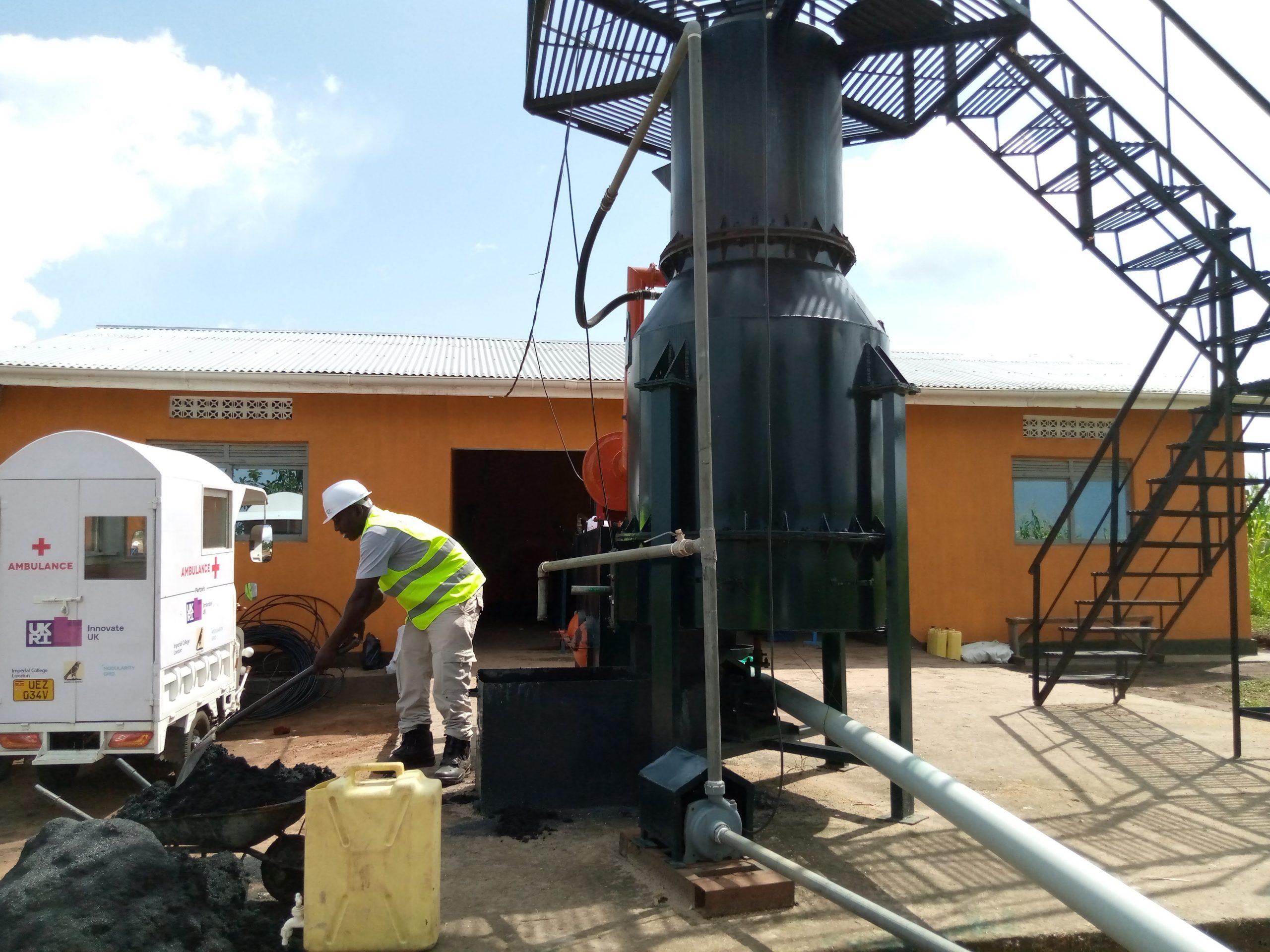 Mandulis uses biomass gasification to produce high-quality biochar
New models, creative thinking
Even with credible carbon revenues, individual mini grids may remain too small for many institutional investors. Due diligence, legal work, feasibility studies and monitoring can cost almost as much for a small project as for a considerably larger one.
“Below a certain investment threshold, the economics simply do not work,” Elizabeth Nyeko said.
One option is to aggregate broadly comparable projects into a portfolio. “If we can reduce the number of variables, investors can assess a group of projects through a common lens and apply it across multiple sites,” she said. Mandulis has completed feasibility work for 18 potential sites in Botswana and six in KwaZulu-Natal, South Africa. The locations were selected partly because of similarities in climate, topography, agricultural activity and available biomass.
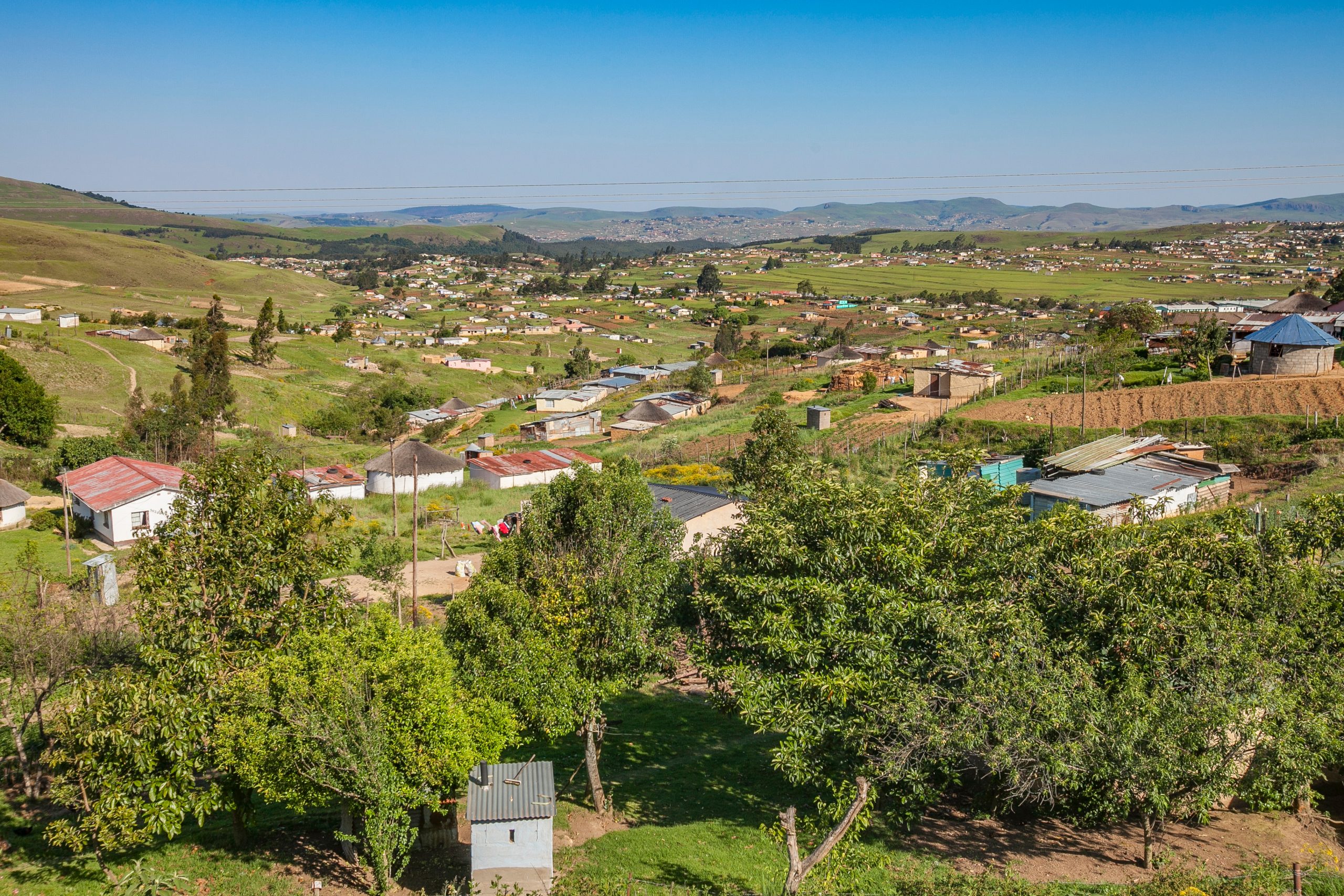 Similar sites have been identified in Kwa-Zulu Natal, South Africa
Technology could also reduce assessment and monitoring costs. Satellite imagery, for example, could help assess numerous sites and provide continuous information about conditions on the ground. Blockchain could give investors a clear trail from the data collected to the projections in the business case – and later show whether proved accurate. “That would give investors live data and insights without requiring people to visit every small project individually,” Elizabeth said.
Meanwhile, governments hold much of the agricultural, geographical and energy-access data needed to identify suitable locations. Public and concessional funding could absorb early-stage development costs or reduce risks that private investors cannot control.
Large programmes are already available. The EU’s Global Gateway Africa–Europe Investment Package aims to mobilise €150 billion for investment in Africa. China has committed to 30 African clean-energy projects and is placing greater emphasis on smaller, replicable “small and beautiful” initiatives. The World Bank and African Development Bank’s Mission 300 aim to connect 300 million Africans to electricity by 2030.
Yet the cost and complexity of accessing these programmes can put them beyond the reach of small developers, leaving a gap between headline commitments and projects seeking modest amounts of early-stage capital.
Regulatory uncertainty adds another layer. Investors need to know how mini-grids will be treated if the national grid eventually reaches a community. Although a mini-grid can technically supply electricity to the network, Uganda’s present policy and tariff framework, for example, does not necessarily make that commercially viable.
The risk is visible in Got Ngur. Before electricity arrived, the land was worth almost nothing. Since the project became operational, prices have risen and people from neighbouring towns have moved in to establish salons and other power-dependent businesses. Yet by making the village economically attractive, Mandulis may also increase the grid operator’s interest in connecting it.
"Profit because of impact"
Demand should not be the problem. The International Energy Agency projects that Africa’s electricity consumption will rise by around 60% between 2022 and 2030, from just over 700 TWh to more than 1,160 TWh. Meeting the continent’s energy and development goals will require almost $240 billion by 2030.
Private clean-energy investment is already growing, from $17 billion in 2019 to almost $40 billion in 2024. But much of it favours larger projects, established markets and commercially secure customers.
Mini-grids could play a vital role in meeting this demand but scaling will require innovative financial and corporate structures. For Mandulis Energy, one option would be “to rethink the company structure and develop something closer to a fund model”.
Electricity revenues, asset ownership and operations could be separated, with a dedicated investment fund addressing the projects’ particular financing needs. By grouping sufficiently similar sites and financing them as a single portfolio, Mandulis could move beyond developing projects one at a time. Elizabeth Nyeko foresees, components being ordered at scale and perhaps 100 sites deployed before the company moved on to the next portfolio, Nyeko explained.
Gabriella Oken Wilbur, a sustainability strategy and net-zero transition executive at Accenture, which has completed the feasibility studies for the new sites, believes scale is “absolutely” possible. Smallholders account for more than 80% of agricultural producers in sub-Saharan Africa and collectively produce up to 80% of the region’s food. That gives any model converting farm waste into energy and biochar a potentially vast base from which to grow.
Electricity, agricultural processing, clean cooking, healthcare and mobility are not simply desirable co-benefits: they help sustain the local economic system on which the investment depends.
Peter BenHur Nyeko
For Nyeko, the relationship between financial return and community benefit is closer than conventional impact-investment language suggests. An investor may seek an exit after five years, but a carbon project operating under a 20-year concession depends on long-term community participation, reliable feedstock, functioning local businesses and customers able to use its services.
That gives the developer a commercial interest in ensuring the community remains viable and grows alongside the project. "Electricity, agricultural processing, clean cooking, healthcare and mobility are not simply desirable co-benefits: they help sustain the local economic system on which the investment depends," he said.
Nyeko’s mission now is to prove that the model does not have to deliver “profit plus impact”, but can generate “profit because of impact”. Speaking metaphorically and wearing his aerospace-engineer hat, he asks: “If hydrogen and methane can send a rocket to the moon, why can’t they provide a brighter light than moonlight?”