
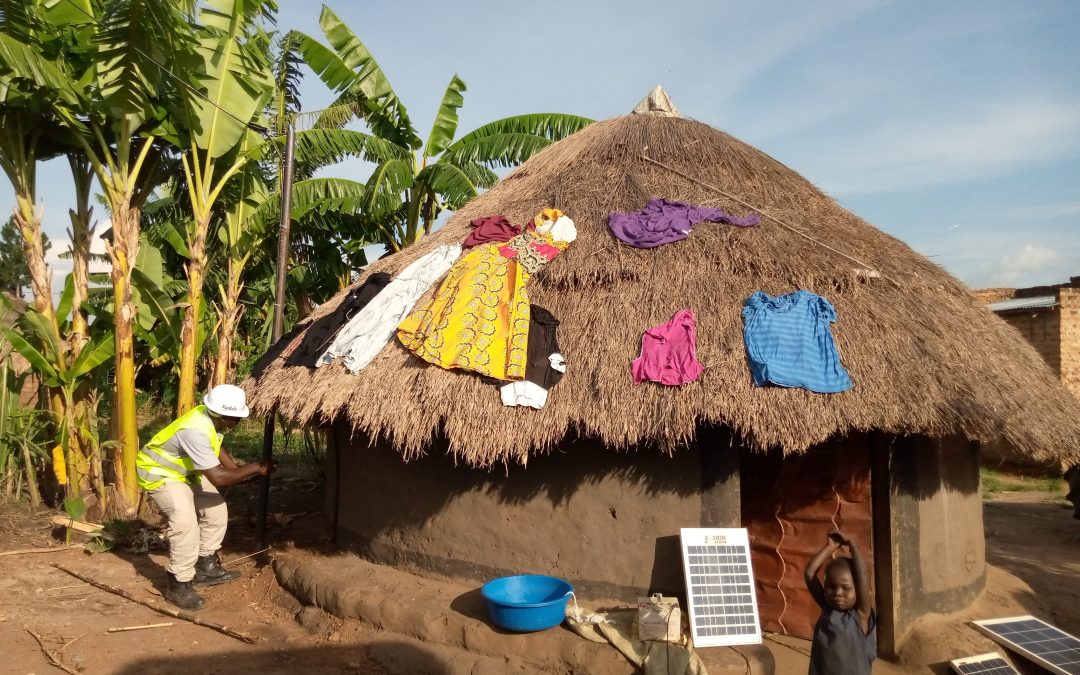
In the agricultural and tourism hub of Nwoya in northern Uganda, the rice husks and groundnut shells that families once burned in their fields now illuminate homes, run mills and grain dryers, enrich soils, and pull carbon from the air. A company making this happen is Mandulis Energy.
“When I founded my company, I made one promise: that the farming families who feed Uganda should not be the last to receive power,” says Peter BenHur Nyeko, whose family fled the country in the 1980s and spent two decades as refugees under UN protection.
Two decades later, the aerospace engineer and World Economic Forum top innovator returned to Uganda and today is challenging conventional views of African markets. His argument is that while investors are right to scrutinise risk, they often miss the scale of the opportunity emerging beneath the headlines. At a time when higher fuel prices, currency pressures and global uncertainty are once again testing African economies, Nyeko argues that investment in domestic renewable-energy infrastructure is not simply a climate imperative but an economic one.
Across Africa, abundant renewable resources, rising industrial demand, supportive policy frameworks and emerging opportunities in carbon finance are creating new investment possibilities. Yet high financing costs, currency risk and limited access to capital continue to constrain the pace at which many projects can scale.
Founded in 2012, the UK-registered developer builds renewable-energy infrastructure that combines power generation with productive uses of energy. Its projects transform agricultural waste into electricity, clean cooking fuel, biochar and fertiliser, creating multiple revenue streams while addressing local energy and agricultural needs.
For Nyeko, the strongest evidence is his company's own trajectory. “We started with a proof-of-concept facility delivering electricity in rural areas, and now we’re moving to industrial park scale,” he says. The company is operational in Uganda and is expanding into markets including Botswana, South Africa, and even Cambodia and Spain.
Uganda has much in its favour. It has one of the cleanest electricity grids in the world, with around 99% of its electricity generated from renewable sources, primarily hydropower. Yet this does not mean the country has completed its energy transition. Around 90% of total energy consumption still comes from solid biomass, while some 85% of households rely on firewood, agricultural residues and charcoal for cooking and heating.
This also creates an opportunity. Uganda generates around 10 million tonnes of banana or matooke waste each year, providing a significant feedstock for circular-economy businesses such as Mandulis, which convert agricultural residues into bioenergy, fertiliser, fibres and other value-added products.
At a time when rising diesel prices are increasing costs across transport, agriculture and industry, investment in domestic renewable-energy infrastructure offers a way to reduce exposure to volatile global fuel markets while creating greater value from resources that are currently underutilised.
Crucially, government policy is aligned with the country's green transition and industrialisation ambitions. Installed capacity currently stands at just over 2GW but long-term plans envisage expanding this to as much as 52GW by 2040.
With a population of over 51 million people, that “leaves massive headroom for growth,” says Nyeko says, pointing to in-country opportunities across everything from power generation to transmission, storage, industrial energy supply and energy-intensive industries.
Uganda’s advantages are reflected across much of East Africa. The region possesses some of the world's richest renewable-energy resources, with renewables accounting for around 69% of installed electricity capacity, compared with approximately 24% for Africa as a whole. Kenya has become a global leader in geothermal power, while Ethiopia and Uganda possess substantial hydropower resources–– the Grand Ethiopian Renaissance Dam being one major hydro project. Across the region, governments are pursuing industrialisation strategies that depend on expanding access to reliable and affordable energy.
Companies such as Mandulis Energy illustrate how developers are adapting to this opportunity. Rather than relying solely on electricity sales, many projects are building multiple revenue streams through products such as biochar, sustainable fuels and fertiliser. This not only creates local economic value but can strengthen project economics and improve investor returns.
Investment Opportunities Across East Africa's Energy Transition
| Generation | Productive Use | Carbon Finance | Infrastructure |
|---|---|---|---|
| Hydropower | Agro-processing | Biochar | Transmission networks |
| Solar mini-grids | Cold-chain logistics | Carbon removals | Distribution systems |
| Commercial & industrial solar | Manufacturing | Clean cooking | Battery storage |
| Captive industrial power | Industrial parks | Sustainable agriculture | Energy services |
INSIGHT 1
The most attractive investment opportunities are no longer built on electricity sales alone. They combine renewable energy with carbon finance, productive energy use and circular-economy business models to create stronger, more resilient revenue streams.
Capital, the real constraint
If the opportunity is so compelling, why is capital still struggling to reach many projects?
“Let's be honest: the real pain isn't finding water – it's negotiating a bankable PPA and finding the cash to survive six years of bureaucracy during the development phase,” says Samuel Zekri, CEO of Hydroneo, a French developer with 22 hydropower projects across East Africa.
His observation points to a broader reality. Across the region, renewable-energy resources are rarely the primary constraint, it is converting technically viable projects into bankable investments. Recent geopolitical shocks, rising fuel prices and currency pressures have only reinforced investor caution, even in countries with strong renewable-energy fundamentals.
The challenge is particularly acute because infrastructure projects require patient capital. Hydropower projects, for example, can take four to six years to move from development to financial close. During that period, developers must fund environmental studies, engineering assessments, community engagement and permitting processes, often with no guarantee that a project will ultimately proceed.
Financing structures add another layer of complexity. While funding is often sourced in euros or US dollars, project revenues are typically earned in local currency. Currency mismatch remains one of the biggest barriers to investment. The Energy for Growth Hub estimates that financing projects in hard currency while earning revenues in local currency can add five to six percentage points to the cost of capital, even where renewable resources are abundant.
The good news is that solutions exist. Studies suggest that combining local-currency financing with guarantees and other risk-sharing mechanisms can reduce financing costs by 20–31%. For this reason, Hydroneo is increasingly exploring local-currency financing through commercial banks alongside traditional sources of project finance.
The approach reflects a broader shift taking place across Africa's financial landscape. While international capital remains important, domestic sources of finance are playing an increasingly significant role. According to the Africa Finance Corporation, African sovereign wealth funds, pension funds, insurers, central banks and commercial banks collectively hold an estimated $4 trillion in assets.
Nyirahindwe hydropower project in Nyamasheke District, Rwanda
Let's be honest: the real pain isn't finding water – it's negotiating a bankable PPA and finding the cash to survive six years of bureaucracy during the development phase
Samuel Zekri, Founder & CEO, Hydroneo
At the same time, the African Private Capital Association (AVCA) finds that African investors comprised one-third of all active participants in venture deals in 2025, underscoring the growing importance of domestic capital in the continent's venture ecosystem. Increased participation by corporates and African development finance institutions points to a maturing investment landscape. Among the most active investors are Launch Africa Ventures (Mauritius), TLcom (Lagos), Renew Capital (Addis Ababa) and Venture Platform (Abuja).
Commercial banks nevertheless remain the backbone of corporate finance across much of the continent. Given the relatively early stage of capital-market development outside South Africa, their role is particularly important. According to McKinsey, African banks generated returns on equity of 19% in 2024 and 17% in 2025, well above the global average of 10%. This strong performance underlines the sector's growing capacity to support economic development and infrastructure investment, even as the next phase of growth is expected to depend on greater operational efficiency and diversification.
Yet despite these encouraging signs, many developers argue that the financing gap remains the single biggest obstacle to scaling Africa's energy transition. The challenge is no longer proving that opportunities exist. It is mobilising sufficient capital, at the right price and over the right timeframe, to realise them.
INSIGHT 2
The constraint is no longer opportunity, but capital structure. To scale Africa’s energy transition, technically viable projects need affordable, patient finance, local-currency solutions and risk-sharing mechanisms that can carry them from development to financial close.
Beyond traditional finance: building an architecture of trust
Developers are increasingly looking beyond traditional banking channels to combine conventional project finance with new sources of capital and revenue. In 2025, Hydroneo partnered with the French renewable-energy crowdfunding platform Enerfip to raise capital for one of its hydropower projects in Rwanda, opening investment opportunities to international retail investors. More than 1,000 investors participated in the financing round. Not only did this demonstrate how alternative financing models can complement traditional project finance, it was evidence of Rwanda's growth opportunity. "I’ll give you a simple fact: when thousands of retail investors crowdfund your hydro project, it tells you everything – the rules are clear, the regulators are trusted, and the market is open for business," Zekri says.
Others are exploring new revenue-linked financing mechanisms. Carbon markets, once viewed primarily as climate instruments, are increasingly being considered as sources of investment capital and predictable future cash flows.
Africa already accounts for more than 14% of the voluntary carbon market, while East Africa has emerged as one of the continent's most active carbon-finance hubs. Kenya, Rwanda, Tanzania and Uganda are developing frameworks for both voluntary and Article 6 carbon markets, creating opportunities across renewable energy, clean cooking, forestry and sustainable agriculture. The East African Carbon Markets Forum estimates that the region has already supported more than 500 carbon-market activities and issued over 100 million carbon credits.
Yet while carbon markets continue to expand, many institutions still treat carbon finance and energy finance as separate conversations. According to Prishani Satyapal, Executive Director of ECHo, the impact funding vehicle of the Catholic Church in Africa, this disconnect represents a missed opportunity. "Many institutions speak enthusiastically about clean energy investment yet fail to connect those discussions with their own carbon and carbon trading capabilities," she says. Carbon-market specialists often operate separately from teams responsible for energy investment, guarantees and development finance. So, while institutions already possess many of the tools they need, those tools remain divided across organisational silos.
Initiatives such as Mission 300, led jointly by the World Bank Group and the African Development Bank Group, are helping to create more collaborative frameworks. But Satyapal believes the next step is bringing the full range of actors to the same table: energy investors, guarantee providers, risk specialists and carbon-market experts. Combined with existing risk-mitigation instruments, including guarantees from the Multilateral Investment Guarantee Agency and EIB Global, the development arm of the European Investment Bank, a more integrated approach could help shift the conversation from repeatedly debating risk to designing solutions that address it upfront. Bringing those capabilities together, she argues, would strengthen project economics, improve bankability and attract more private capital.
Fact Flash: Carbon dioxide removal vs carbon reduction
- Most carbon credits are based on avoiding or reducing emissions, such as replacing diesel power with solar. Carbon dioxide removal (CDR) goes further: it physically removes CO₂ from the atmosphere and stores it durably.
- Biochar, used by Mandulis Energy, converts biomass into a stable charcoal-like material that can store carbon in soils for decades or centuries.
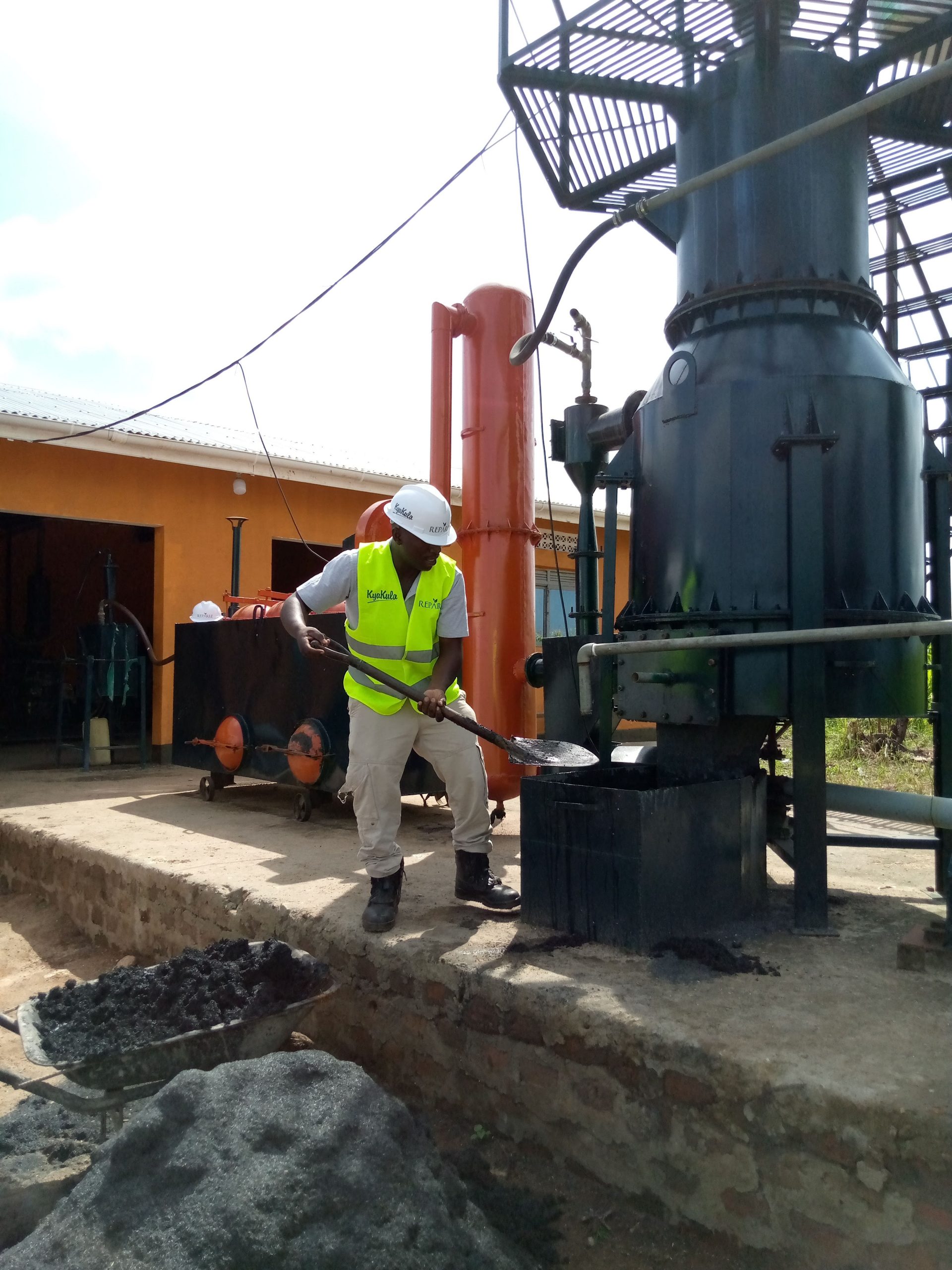 A Mandulis Energy operator removes biochar from a biomass pyrolysis unit
CASE STUDY | How Mandulis Energy is clearing the carbon bar
Rather than relying on a single carbon standard, Mandulis Energy has built a layered carbon-market architecture designed to meet international expectations for quality, transparency and traceability.
| Function | Organisation | Role |
|---|---|---|
| Carbon registries | Puro.earth (Finland), Rainbow Standard (France), Isometric (UK) | Project registration and carbon credit issuance |
| Market recognition | Frontier | All three registries are recognised by the carbon-removal buyers coalition backed by Stripe, Google, Shopify, McKinsey and, since 2025, Anthropic |
| Digital MRV | Offstream (USA) | Digital measurement, reporting and verification (dMRV) |
| Credit sales | Cloverly & Patch | API-based platforms connecting registries with buyers |
| Independent assurance | BeZero Carbon | Third-party project ratings |
| Risk management | Carbon credit insurance | Protection against reversal and invalidation risks |
Why it matters
Rather than asking buyers to accept lower standards, Mandulis has assembled multiple layers of assurance — verification, recognised registries, independent ratings, insurance and digital market infrastructure — to make carbon credits generated in Uganda comparable with those from projects anywhere in the world.
We are not asking anyone to lower the bar for Africa. We are clearing it
Peter BenHur Nyeko, Founder & CEO, Mandulis Energy
INSIGHT 3
The future of carbon finance is not simply about selling credits. It is about creating the governance, verification and financial structures that allow investors to treat carbon revenues as a credible part of an infrastructure project's financing stack. African developers that can demonstrate this level of institutional credibility may be better placed to attract international capital.
Changing the lens on impact & market risk
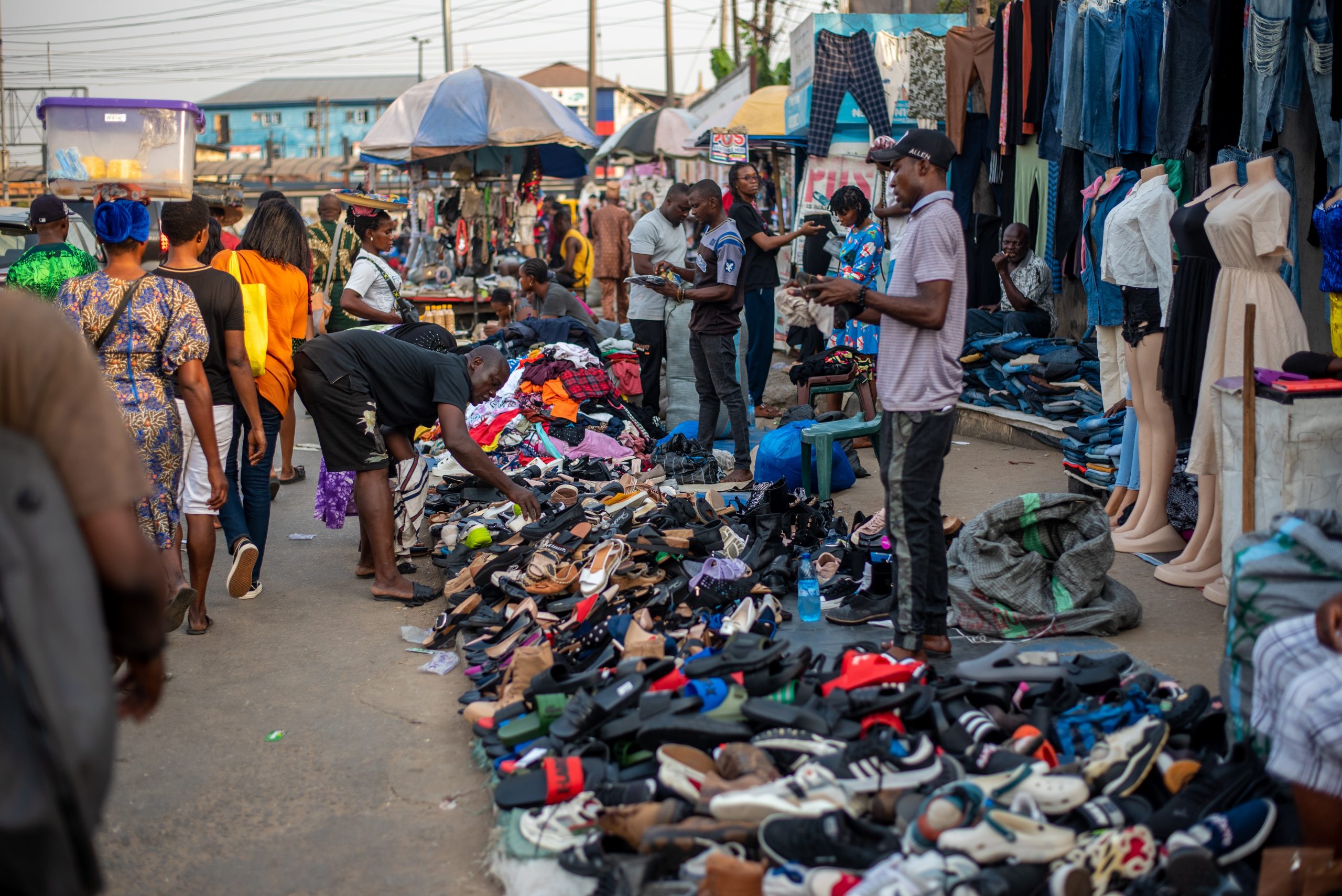 In Nigeria, people are working, trading buying. Editorial credit: Tolu Owoeye / Shutterstock.com
"When you guys finish what you are doing here, will we be able to buy shoes?"
The question, heard by Satyapal at a community gathering at one of ECHo's 18,000 sites in Nigeria, goes to the heart of a debate shaping investment across the continent.
Many Western investors, she argues, continue to frame Africa primarily as an impact story. Yet in many rural and underserved communities, what they are overlooking is demand. "People are working, trading, buying but they lack access to affordable, scalable solutions," she says. In other words, the premium they are paying is often mistaken for poverty when it should be viewed as evidence of unmet demand. In Nigeria alone, ECHo estimates it can reach around 89 million people, representing a potential $3 billion investment opportunity.
This is the gap that ECHo, the impact funding vehicle of the Catholic Church in Africa, aims to address. By leveraging church-owned land and infrastructure embedded within communities, it seeks to unlock opportunities across energy, agriculture, healthcare and education.
People are working, trading, buying but they lack access to afforable scalable solutions
Prishani Satyapal, Executive Director, ECHo
What makes the model particularly interesting is its approach to risk. Unlike political institutions, faith-based organisations are not subject to electoral cycles. “A political leader might change but the Imam or Bishop doesn’t,” she says. Their presence in communities is often measured in decades rather than years, providing a degree of continuity and trust that many investors struggle to find elsewhere.
There broader lesson extends beyond ECHo. Across East Africa, companies are already demonstrating that solutions developed for African markets can become commercially viable businesses with relevance far beyond the continent. Founded in Kenya in 2007, Sun King has grown into the world's largest off-grid solar company, manufacturing hardware in Africa and expanding into markets as diverse as India. Its long-standing competitor, d.light, now operates in more than 70 countries across Africa, Asia and Latin America.
The question, then, is not whether risk exists. Recent geopolitical shocks, currency pressures and financing constraints have shown that it does. The question is whether that risk is being priced correctly. Nor is it whether capital exists, it is whether the right capital can reach the right projects at the right time.
For investors, the challenge is not simply to identify Africa's risks. It is to recognise where those risks may be obscuring opportunity. As the continent's energy transition and industrialisation gather pace, those able to distinguish between perceived risk and actual risk may be best placed to benefit.
Speaking philosophically, Nyeko reflects on something his grandmother used to say –– buru onywalo mach, which means it is the ashes that give birth to fire. "The husks our farmers once burned now deliver power and fertiliser and with growing proof that a project in northern Uganda can earn the same confidence as one anywhere else in the world," he says. Speaking practically, however, he has this advice. "Don't come to Africa with business models that have flourished in the US or Europe by borrowing at 5%, because that won't work. Come to Africa to invest in innovation."
For decades, innovation was assumed to flow from developed markets to emerging ones. Yet companies such as Mandulis, Sun King, d.light, and many others, suggest a more complex reality. As Europe confronts its own energy, agricultural and decarbonisation challenges, some of the most relevant solutions may emerge not from Silicon Valley or Brussels, but from the farms, industrial parks and rural communities of Africa.