
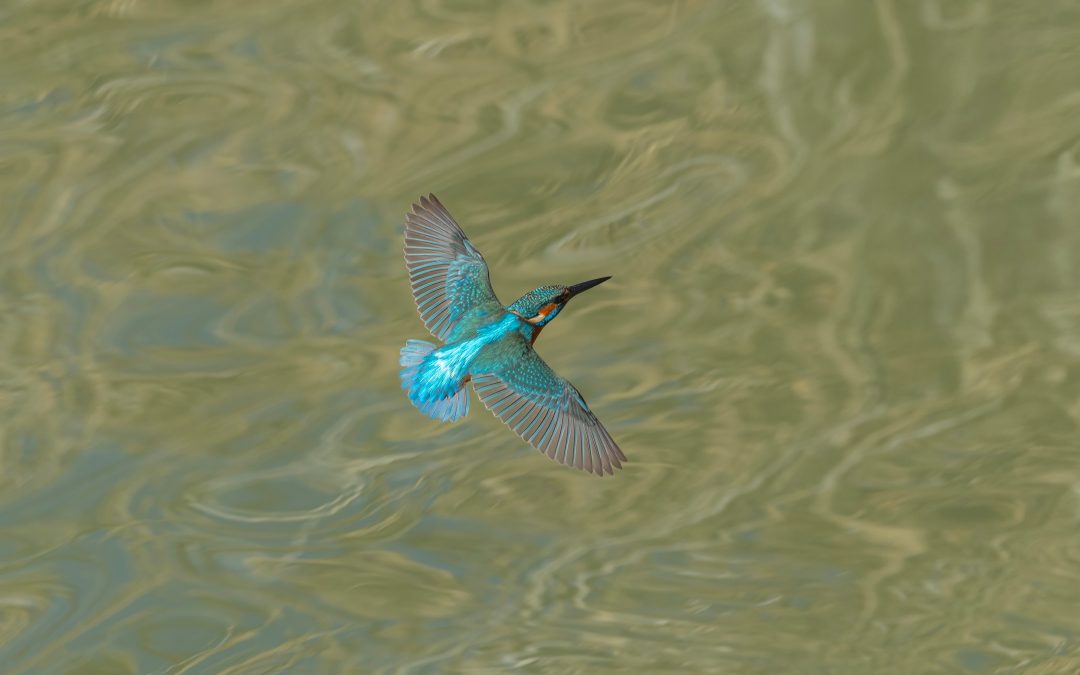
Back in 2024, I launched Delve In Media and wrote a blog post about how the kingfisher brought the logo, colour, palette and design together. It started something like this but then things became hazy.
In September, on a walk along a stretch of the river Wandle in southwest London, I was stopped in my tracks by a flash of metallic blue and a shimmer of orange. It was a rare sighting of the Common Kingfisher, Alcedo atthis. Catching even a fleeting glimpse of this shy little bird, with its distinctive piping call, is always uplifting. It was particularly so that morning.
The kingfisher holds special resonance. I was five when the brown-hooded Kingfisher, Halcyon albiventris, which is found in the woodlands of sub-Saharan Africa, flew into the window of my family home and hurt its wing. It’s a small bird with a brown head, a bright orange beak, and wings splashed with turquoise and black. I don’t remember the exact details, or for how long, but we cared for the kingfisher until it was ready to be set free.
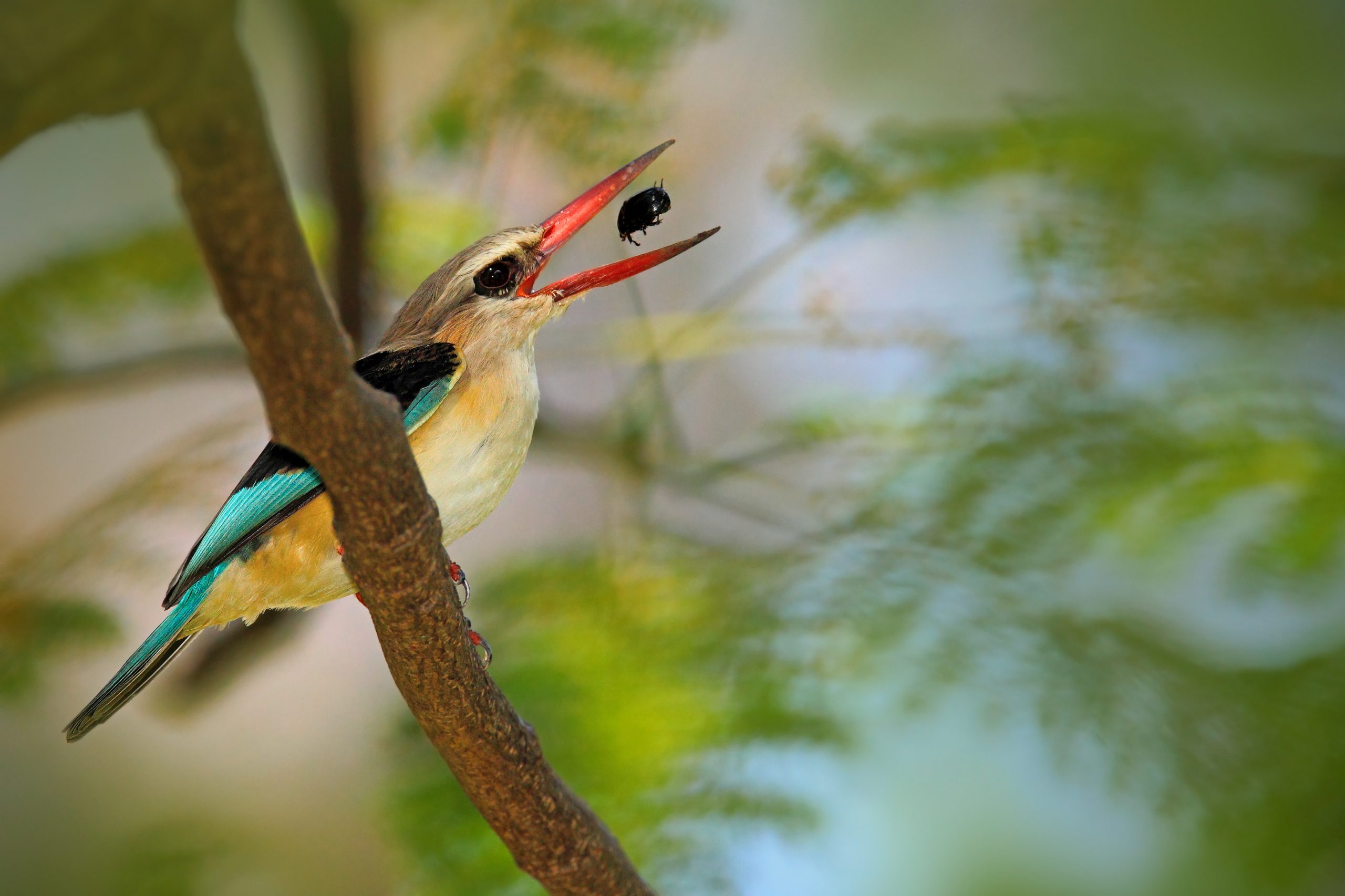 The Brown-Hooded Kingfisher from sub-Saharan Africa is territorial
Human connections, communication and colour
Spotting the kingfisher on the river that morning, brought the brand into sharp focus but things were about to get hazy. Generative AI was shaking up all things content related, and the shake out would be fast. Early 2025 was a little nerve-wracking. Some projects never materialised and my strategy was hazy.
Then everything changed, just like that, in a flash of kingfisher blue.
The first shift was that I was invited to ghostwrite a business strategy book for two people at the top of their game. It was a huge privilege. I would interview the authors, research and write, an old connection would edit and project manage. The proposal we developed for their book was accepted by Harvard Business Publishing.
What I learned during these few months is that generative AI can be invaluable but it can never replace the human story.
I was deep in the weeds of that process when I had another call from another former connection. In 2021, the European Union had launched Global Gateway, its new strategy for international development, and in 2024 established the EU-Africa Business Forum Facility. They needed a communications consultant to support the 2025 continental forum (AEBF2025) in Angola. I would also be responsible for the monthly bulletin and quarterly newsletter.
Over the course of five months, I worked with a bunch of professional, talented, competent, creative and very, very funny people. I also met and interviewed senior executives from across Europe and Africa who echoed what I already knew. The Namibian trade economist Paulina Elago summarised it best. “Africa has no shortage of resources or opportunity,” she said, but more was required to address risk perception. This would help more projects towards implementation. I asked for a solution. Her response was not just “communication, communication, communication,” but also implementation and better sharing of information on the right platforms.
I’m not a technical or risk expert, nor do I implement projects. I am by all accounts a writer and, over the years, have added other feathers to my nest. Before AEBF2025, I had fully grasped the breadth of what strategic communications involves. But thanks to a competent core team and, yes, using generative AI as a support tool when appropriate, I survived. Was it perfect? No. Could I do things differently next time? Of course. A good communications strategy is a process of evolution and continuous improvement. It also demands that you listen, learn and stay curious. That means understanding not just the competitive landscape but also the role of all necessary stakeholders. In this case it was policy, business and finance.
In the months that followed AEBF2025, the clouds parted. I didn’t need to change my Delve In design or the brand. Teal is still my signature colour. Orange still makes me think of Africa, its sunsets, burnt sand, flamboyant trees and red-hot pokers – those tall, exotic flowering perennials native to the continent. The kingfisher is still my favourite bird.
But, what I wanted to delve into was different.
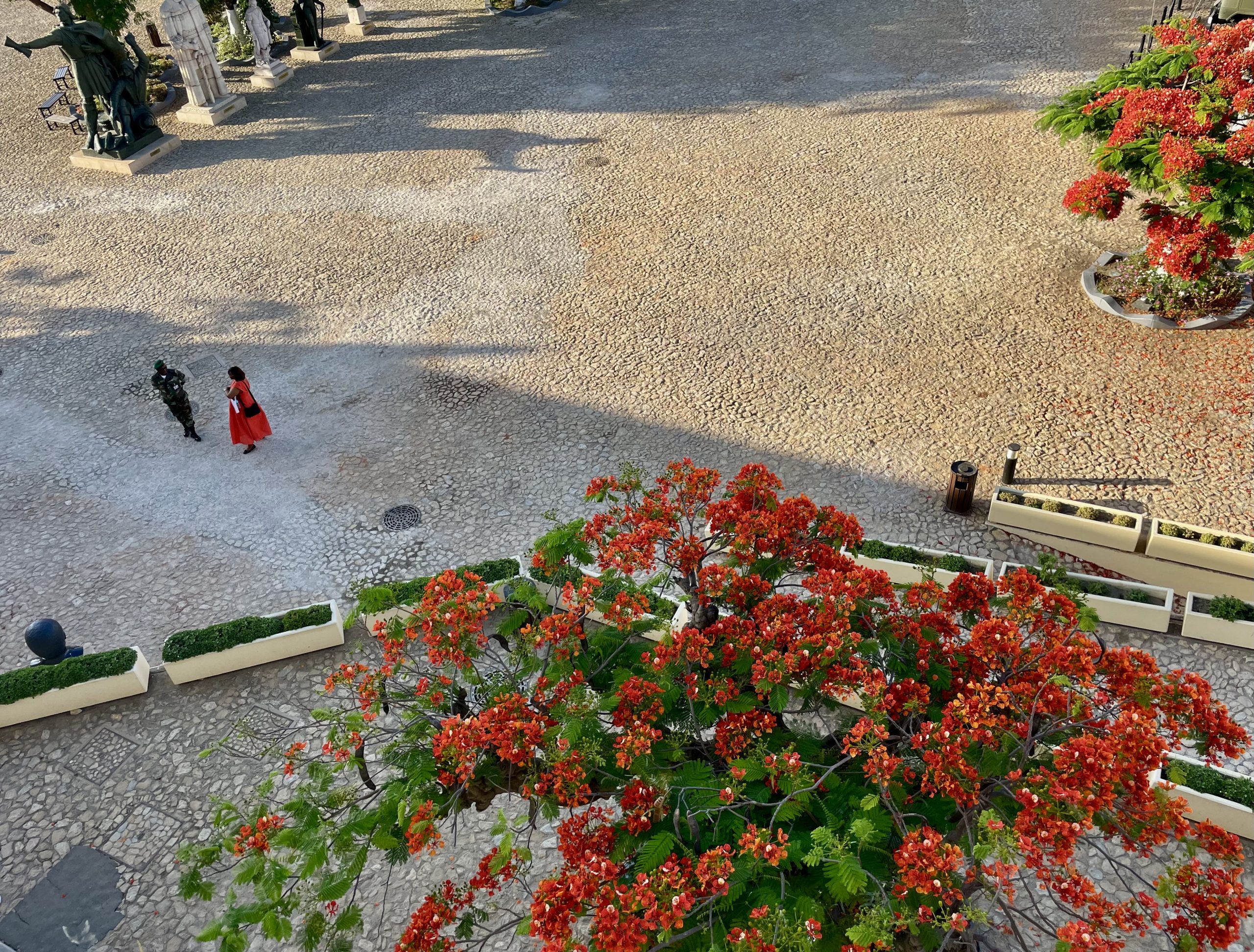
A view from the Fortress of São Miguel, Luanda, Angola
Cosmoplitan but diverse
The kingfisher offers an apt metaphor for my business. Found across Europe, Africa, Asia, Oceania and the Americas, with three sub-families and more than a hundred species, it is a diverse crowd. Not all are splashed with the signature blue. Some migrate, others are territorial species and deeply rooted in place. They can remain loyal to a particular stretch of riverbank, lakeshore or woodland.
Take the brown-hooded kingfisher from the territory of my childhood: if there is enough food and water about, something we should all care about, it will stay put. If food is scarce, it might move neighbourhood, but it has no interest in long-distance migrations. Sub-Saharan Africa is a pretty good place to nest.
Other kingfishers, like the 'common' one I've chosen for my branding, might migrate to escape the harsh and bitter winters of Russia, Scandinavia or the Baltic States. Where it's milder, in London for example, they might stick around; much depends on climate and food availability.
Like the kingfisher, policymakers, businesses and investors must adapt to their changing and increasingly unpredictable environment. They must balance global reach with local resilience. They must think carefully about how to protect their bend in the river or neck of the woods in order to protect their livelihoods. They must question whether to stay local and build, or fly off elsewhere to ride out the economic winter, perhaps where the sun shines for much of the year.
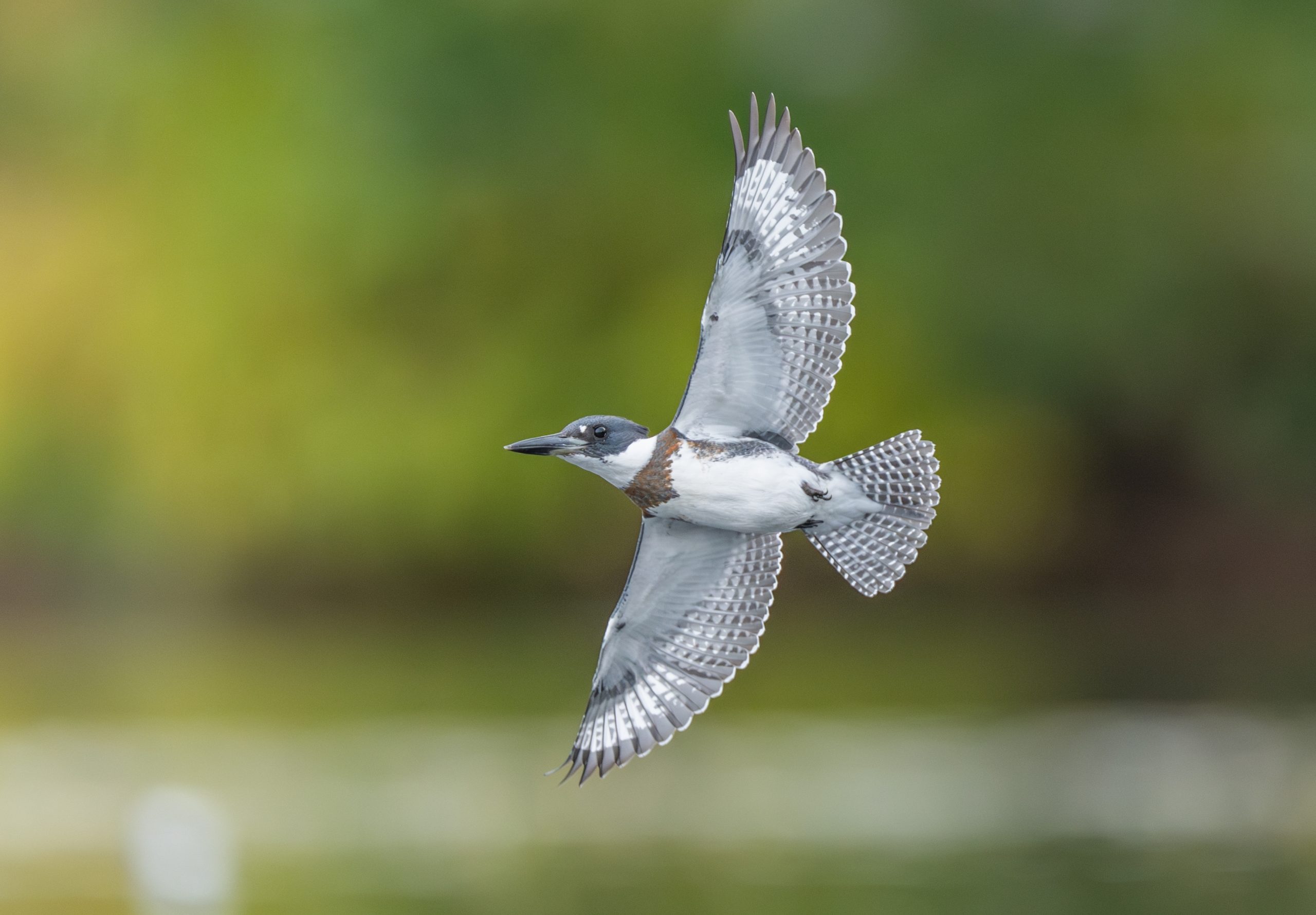
The Belted Kingfisher is a grey migratory bird
Keeping it personal
Naming something – whether a child, business, or bird – can be tricky. Aside from its Latin name, the Common Kingfisher is also the Eurasian Kingfisher, the European Kingfisher and the River Kingfisher. Delve was my mother's middle name, and it felt right. While the kingfisher dives for food, I like to delve into issues. Since my territory covers everything from renewable energy to insurance and healthcare, travel and tech, audiovisual and art, I could also go in any direction. It could be Delve In Anything.
Since 2024, Delve In Media was, bar a few trusted contributors, Pamela Whitby. A few months after launching, I was invited to speak at one of the first Women Lift Women networking events of women, mostly in finance. The founder of WLW, the original connection – an old school friend – generously wanted to help me plug my business. At that event, and at many since, I have been asked: how many people do you employ; who are your clients; are you looking for private equity; do you want to grow it to sell it on?; what does Delve In Media do?
In 2025, the clouds parted. The strategy became clear. My services will be personal, draw in trusted experts when appropriate. Delve in Media will be where selected contributors share commentary, insight and analysis. Everything will be underpinned by the Delve In Framework.
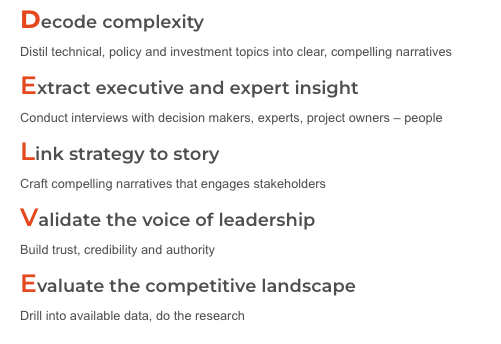
The world is helter skelter. Supply chains are threatened. Artificial intelligence can be an axe or an arrow. The tech bros are the new oligarchs. Geopolitics is reshaping international relationships. The cost of living is everybody's crisis.
Against this backdrop, the aim is to delve into projects and innovations, and hear from companies and people, that are targeting impact and how they are doing it – whether it's providing free rural renewable electricity or fertilizer from banana skins, investing in local vaccine manufacture, making a feature film, or developing a long-term capital intensive transport corridor that promises skills upliftment and real jobs.
The focus will be on how development becomes investable, and delivers long-term sustainable return – not just for business and investors but for ecosystems and the environment, the earth and its inhabitants.